Monday, October 10, 2022

Some pets have all the luck & some bears live to suffer

Some cats are lucky; other cats (and pets in general) are not.  Example: the small animals like guinea pigs who are being surrendered or given away “in droves as the world reopens,” the New York Times reported earlier this month.

The predictions about dogs and cats being returned or surrendered to shelters once people were back to work or school didn’t play out – happily for them.  But “small animal surrenders spiked by more than 50% nationwide in the first six months of 2022, compared to the same period the year before.”

Those suddenly homeless small animals include reptiles, birds, rodents and even fish.  The return traffic is so heavy that Manhattan’s City Council is considering a bill to ban sale of guinea pigs in pet shops.  In Central Park, numerous domestic red-eared slider turtles and rabbits have been found, along with guinea pigs. 

By comparison, surrenders of cats and dogs have climbed less than 7% over the year before.  One theory for that is “human attachment”: people feel that small animals are “less interactive” than dogs or cats, less able to fill a void and provide the companionship that people are looking for.

Adding to the issue of shelters now being “glutted” with small animals, fewer adoptions are taking place.  So, still more animals in need.

Nor is the problem of abandoned “pandemic pets” limited to the US; it’s also happening abroad.  In England during a six-month period ending in July, there was a 24% increase in reports of such animals (including numerous fish and snakes). Last month’s “Guinea Pig Awareness Week” accompanied “a 90% increase in (their) abandonments, on top of a 49% increase in rabbits.”

Right now, there’s widespread big bad news for small animals.  Is anyone out there pining for a guinea pig, or 3 or 10 of them?  https://tinyurl.com/5888pfyh 

For another view on pet adoption and abandonment, read the column linked here.  It’s one more excellent essay by Margaret Renkl.    https://tinyurl.com/58hk2kzk   

 Lucky cats

. . . And the winning number is 31!  That’s how many cats were spayed or neutered last week through one concerted effort to make it happen.  The felines involved would not have benefitted from the procedure without the shuttle-to-sterilization sponsored by the Animal Protection League of NJ  (https://aplnj.org).

                                                                 Obi pic
Promoted in the last post here, the procedure will allow the cats, now also vetted and microchipped, to lead kitten-free lives, thereby doing their bit to help manage cat overpopulation.

Best of all, the plan is to do it again.  Next time, though, the initiative may be called the “Kitty Kab,” says APLNJ’s Sandra Obi, who coordinated the spay-neuter operation.  Already, three people with 6-10 cats to be “fixed’ are on her wait list.

Fracture

by Ellen Bass

When the grizzly cubs were caught, collared, and taken away—

relocated they call it—

their mother ran back and forth on the road screaming.

Brutal sound. Torn from her lungs. Her heart,

twisted knot, hot blood rivering

to the twenty-six pounding bones of her feet.

Just weeks before

I watched a bear and her cubs run down a mountain

in the twilight.

So buoyant, they seemed to be tumbling

to the meadow,

to the yarrow root they dug, rocking

to wrest it from the hard ground, fattening for winter.

They were breathing what looked like gladness.

But that other mother . . .

Her massive head raised, desperate to catch their scent.

Each footfall a fracture in the earth’s crust.

(c. by Ellen Bass. First published in Poem-a-Day on August 17, 2022.)

#


Tuesday, September 27, 2022

A record-holding bird, beavers as angels, & a cat shuttle

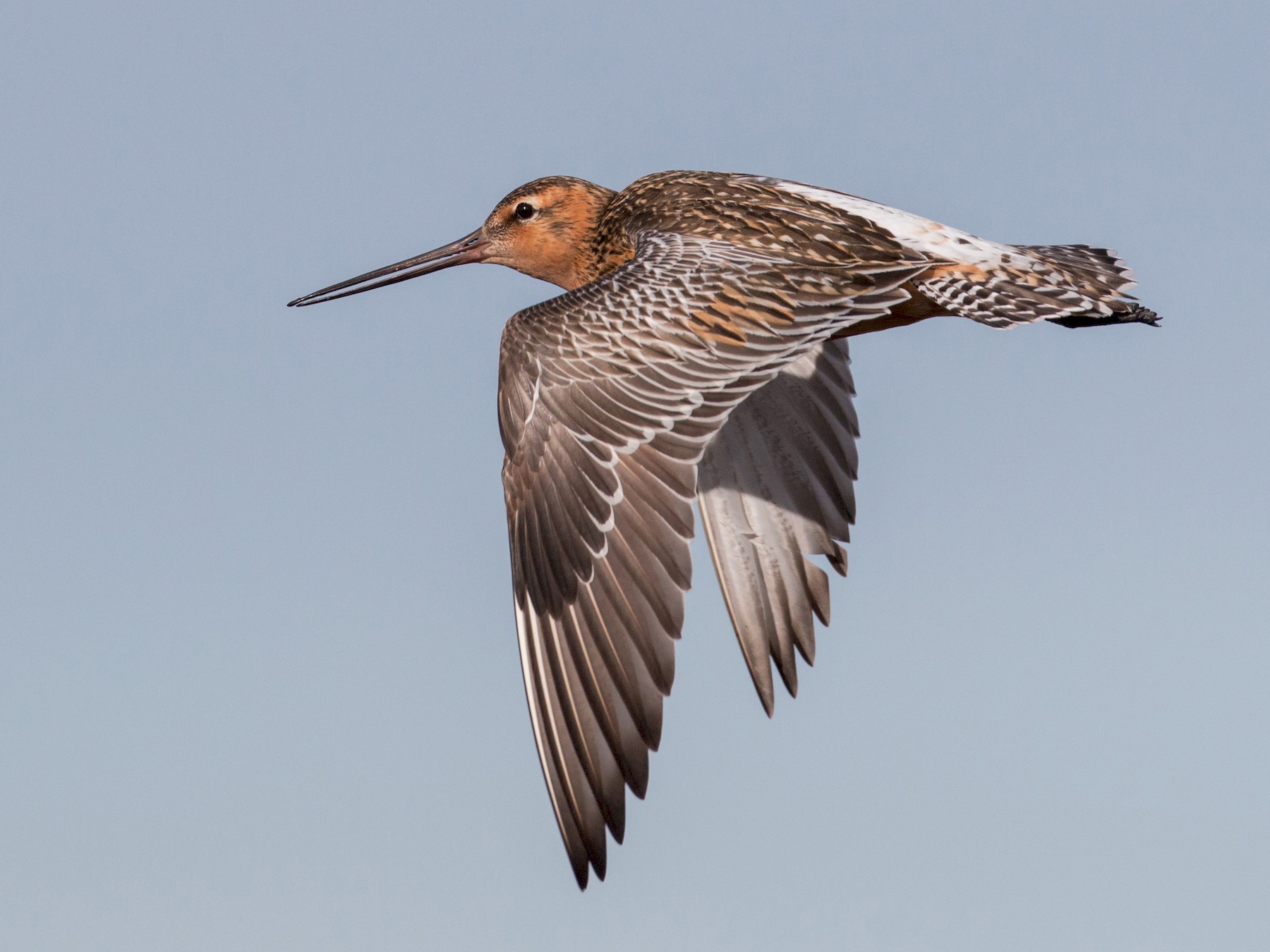
Bar-tailed godwit in flight
“Look!  Up in the sky!”  

Birds are often considered remarkable – for their beauty, their intelligence or inventiveness, their song.  How about if they hold the distance record for their non-stop migration flight: 7,000 miles?  Especially if they do it without food, water or rest for eight to 10 days and nights, through all kinds of weather?   

Bar-tailed godwits, truly remarkable birds, annually travel from Alaska to New Zealand to breed and raise their young.  Then, duty done, they fly back to Alaska, apparently never asking “Is this trip really necessary?”

Talk about “extreme sports”!

Shaped something like missiles with aerodynamic wings and bodily changes that facilitate their travels – including carefully added body fat that fuels their flights -- godwits fly non-stop from Alaska over the Pacific to Hawaii, then Fiji, till they reach New Zealand’s beaches. 

While their navigation system is still uncertain, there’s no doubt godwits have one, and their young somehow catch on when they fly north to Alaska.  It's estimated that some 90 thousand birds make the annual trip for more food and fewer predators – and 90% make it. 

Only through greatly improved technology in recent years have scientists become able to track such bird flights.  Now, they can follow individual birds in real time.    https://tinyurl.com/25na9s6r

Now the “good guys”


Beavers: devils or angels?  These days, they’re trending toward angels, especially in parts of the country experiencing drought.  “Water” is the magic word.


In the bad old days for beavers, their dams often foiled farmers’ plans so they were sometimes dynamited or otherwise destroyed, and the federal government killed the animals – nearly 25 thousand of them last year.    

Gradually, people started seeing advantages to beaver dams and began to happily co-exist: dam pools provide water for livestock and wildlife during droughts; they slow down destructive torrents of water raging down mountain sides; and they turn creeks into wetlands, clean the water and serve as buffers against wildfires.  In some places where their dams aren’t needed, beavers are being relocated to areas where they are -- people are learning to “leave it to beavers.”  https://tinyurl.com/52b9tk9n

Dogged about accuracy

Last week’s post included an entry about “teenage dogs,” as identified by Dr. Alexandra Horowitz, a dog behavior expert.  I captioned the accompanying image of a black dog “Quid,” assuming that’s who it was.  Then, from a review of Horowitz’s new book, The Year of the Puppy, I learned I was wrong because it includes a photo of the real “Quid,” short for “Quiddity,” btw.

That rebellious-ready black dog must have been a stand-in.  Maybe even another teen dog.  https://www.nytimes.com/2022/09/18/books/alexandra-horowitz-year-of-the-puppy.html

A happy end note

The heroic job of rescuing some 4,000 beagles from a Virginia breeding facility that supplied animals for experimentation is finished, thanks to the HSUS and its partner organizations around the country.  Beagles who would have been used, abused and killed are now starting real lives in loving homes.

Linked below, the video stars some of the rescued beagles learning to play; it’s followed by a few flashbacks to the huge, widespread efforts on their behalf.  https://www.youtube.com/watch?v=MgCOdi7pRn0   

Shuttle off to . . . sterilization

As the state’s central resource for information on community cats and Trap-Neuter-Return (TNR), the Animal Protection League of New Jersey (APLNJ) also encourages and assists with implementation of that program. 

Now, seeing a need to transport large numbers of cats through the TNR process, the organization is offering a shuttle service next Tuesday, Oct. 4.  APLNJ subsidizes costs so the total price of $60 per cat ($70 for no ear tip) also includes a microchip.

If demand continues for shuttles-to-sterilization, the service will too.  (https://aplnj.org/tnr/)


Monday, September 19, 2022

'Royal' corgis, butt tales, teen dogs & ER tips

Two stories about animals have added a bit of cheer, and even a few laughs, to the sad news of the death of Britain’s Queen Elizabeth II.  One featured corgis, the queen’s long-favored dog breed, while the other had to do with telling the bees (you read it right) the news of their queen’s demise.   

A corgi
The bee-telling tradition is charming – the kind of story that might have appeared in the New Yorker magazine years ago under the heading “There’ll Always Be an England.”  In the centuries-old practice, bees are seen as members of the family; therefore, they should be kept informed of family events.  

After the queen’s death, the Buckingham Palace beekeeper reportedly “placed black ribbons tied into bows on the hives before telling them in hushed tones that . . . .”       https://tinyurl.com/43x2k3xs

When you think of a corgi, how do you picture the dog?  Anything like this description from a Washington Post feature story?

“Lil’ stumpy guys. Potato-shaped bodies and clownish faces. Short kings. Stocky, bossy dogs who think they’re big — who have seemingly no idea that they’re a toast-colored puffy cylinder of dog, suspended merely inches above the ground — because they have a job (herding cattle and/or small children, by nipping at their heels). Whose most notable characteristic after their stubby little legs is their thick, fuzzy butts.”

Or maybe “Floofy butts.” Or “Wiggle butts”?

It remains to be seen whether a different dog breed in the royal family – now including a cocker spaniel, beagles and Jack Russell terriers – will gain the fame of Queen Elizabeth’s corgis.  https://tinyurl.com/bdzm3bj8;  https://tinyurl.com/2sd2ezz6

But, butts . . .

On the subject of animal butts, there’s more to be said about cats’ posterior region and what felines’ human caregivers can learn from that vicinity.  That includes the whimsically-named “dingleberries” and advice on cleaning the area (or not), and swollen (interior) anal glands.   https://tinyurl.com/2n7bffru

(Blogger’s note: Although Billy Summers wasn’t “scooting,” he was over-attentive to his anal area.  To his vet, that signaled impacted anal glands – which only a vet should manually empty, thank the power.  And btw, this happens with dogs too.) 

Temporary teens

The widespread concern about human teens right now might also apply to the teenage dogs who occupy an age bracket not often recognized.  Dr. Alexandra Horowitz, a cognitive scientist who studies dogs, discusses “Quid,” her own 6-month-old dog, who has been a model citizen, till now.

Quid
Now, though, Quid has suddenly turned into an insubordinate teen – ignoring directions and orders, being unexpectedly headstrong and behaving in new, unpopular ways at home as if seeking parental disapproval -- and being met with . . . patience.  That’s because Dr. Horowitz understands that Quid is going through a stage in her life that too few people know about, understand or tolerate very well.

In contrast to how dogs are often treated during this phase – repeatedly punished or even surrendered to shelters – she understands what’s happening with her dog and knows it will pass.  The “canine adolescence” period is a distinct stage of development that can last from about 6 months old through a dog’s second birthday.

But too often in ignorance of this developmental stage, people are more likely to think or say that such a dog is “bad,” rather than “going through a phase.”  Then, wrong as relinquishment to a shelter for behavioral reasons can be, when euthanasia is what happens next, it’s also unspeakably cruel.  https://tinyurl.com/949yyk7s

When to ER? 

Finally, one more pet-health issue: when to take a pet to the ER.  The Dodo article linked below spells out 10 reasons (ingesting a toxic substance to continuous seizures) for going directly to the ER with your pet.  Each one also includes how the ER vet will treat your pet.   https://tinyurl.com/2knmkhpd

Take care! 

#

Saturday, September 10, 2022

It’s that awful time again . . . & then, some lightening up

As with summer, when Memorial Day signals the season’s unofficial start nearly a month early, autumn for many of us begins with school opening, then fall clothes, cooler nights, leaves turning and Halloween paraphernalia everywhere.  

And, alas, hunting.  Here in Mercer county, it’s called a “deer management program” by the county park commission – a “program” that aims to “reduce the overabundant deer herd in the . . . region.”  

“Management” in this context means killing white-tailed deer, who are described as “one of the largest regional threats to biodiversity of flora and fauna in central NJ,” and whose “herbivory. . .jeopardizes “the native plant understory and overall forest health by degrading its habitat value for other wildlife.”

Bow hunting for deer began today in some area parks, and continues Monday-Saturday until Feb. 18, 2023.  Firearm hunting starts in two areas on Monday, Dec. 5 and continues through Feb. 11, during periods specified.  Parks and regions involved with firearm hunting will be closed to the public.

“There will be no hunting on Sunday,” according to the commission.  Make of that day-of-rest fact what you wish.  And do the same with the decision to hunt and kill deer, rather than using non-lethal means of (truly) “managing” the deer population.

So area residents will start seeing more deer on the run, away from parklands dedicated to “deer management.”  I’ve already startled two separate deer in my tiny back yard, where they were grazing (and hiding?) in a narrow length of bushes and fence.  Where did they go from here?  It’ll be a long five months of on and off hunting for them.  

Unique support animal   

                      WallyGator          Henney image
Even though deer need our support, we sometimes appreciate emotional support from animals.  How about an alligator?  That idea’s for real, btw, as a Pennsylvania man has proved with his certified support alligator, WallyGator, for more than 5 years. 

The two – Joie (pronounced “Joe”) Henney and his 70-pound, 5-1/2 foot pal -- sleep in the same bed; watch tv and go just about everywhere together (area tourist sites, farmers markets, area creeks . . .); occasionally swim in a friend’s pool; and go to the vet for WallyGator’s annual checkup.  

It all began when Henney helped a Florida friend by taking in 3 juvenile alligator rescues.  Two eventually went to reptile refuges, but Henney kept 14-month old WallyGator, with whom he’d already bonded.  When his pet later cheered him out of depression, he realized he had an emotional support animal, and has happily made the most of that ever since.        https://tinyurl.com/p7zzrjb5

My apologies to elephants

                                                                      Elephant Crisis Fund image
Elephants have long been very special animals to me – but my huge oversight last month could give the lie to that claim: I totally missed a very important new stamp to honor elephants.  Issued August 12, the US Postal Service “forever” stamp celebrates the love of an elephant mom with her calf.

The Postal Service's background story is way too upbeat about elephants – insufficiently reflecting their truly perilous position these days in the wild and in captivity.  But, I hope that as people buy the stamp, they’ll think more about elephants and look into the organizations committed to saving them -- “Save the Elephants” (SavetheElephants.org) being the main one I recommend.

Which leads to California’s Performing Animal Welfare Society (PAWSweb.org), an admirable organizations that cares for elephants saved from circuses, zoos and other inhumane lives that elephants have long been forced to live.  A look at the PAWS’ website will tell the story far better than I can.  

There, I recently found out about an activity elephants love and PAWS contributors support: dusting.  No, they’re not house-cleaning, but protecting themselves from bugs and the sun.  Here’s a great link to a few PAWS videos showing elephants dusting: please take a look!     https://tinyurl.com/2ypxdpkx


Sunday, August 28, 2022

Ancient sea monsters & continuing beagle rescue

“Summer afternoon, summer afternoon; to me those have always been the two most beautiful words in the English language.” – Henry James 

                                                                                          AMNH pic

For many of us, a summer afternoon is even better when an ocean is part of the picture too. But of course, oceans come with hazards way more serious than too many other people on the beach. For starters, think: sharks and other large marine creatures with variable attitudes toward humans.

And that suggests this question: which are you more scared of when you’re in the ocean: sharks or orcas (aka “killer whales”)? Or . . . (fill in the blank – if you can!) The answer will surprise you. https://tinyurl.com/4ym6x5nu

However, since sharks get the most “credit” for biting people, this clarification seems in order: Surprisingly enough, juvenile white sharks are responsible for most bites of humans, and that’s thought to happen because their eyesight is so comparatively bad, along with suspected color blindness! They can’t easily distinguish between “a swimming person, a paddling surfer or a meandering seal or sea lion.” https://tinyurl.com/yckncvht

However, if we were (admittedly very rare and short-lived) humans millions of years ago, we’d have a truly colossal reason to be terrified: megalodons, now described as “prehistoric megatooth sharks,” “the biggest sharks that ever lived” and “the biggest predatory fish of all time,” according to New York’s American Natural History Museum (amnh.org/exhibitions/sharks) and other sources.  

But we’re lucky today to be able to see enough of the fearful megalodon to feel a proper awe because the “Shark” exhibition at AMNH for the next year includes “dozens of life-size models [of ancient and modern sharks] ranging from 33 feet (you read it right!) to 5.5 inches long.”  https://www.amnh.org/exhibitions/sharks (don’t miss the short video) and https://tinyurl.com/3sckhw9u

The second site above reports new findings based on 3-D computer modeling that suggest megalodons were in fact even bigger, faster and hungrier than believed till now. 

Two Princeton University researchers offer their take on megalodons in this video that provides the sea-setting for the prehistoric marine terrors – and a couple chuckles. https://tinyurl.com/2p82tmt5

Megalodon and shark fans in general still have more than a year to get to the museum for the shark exhibit.  https://www.amnh.org/plan-your-visit


To the rescue of 4,000 beagles

Simply watch this video about beagles being rescued from a hideous laboratory situation (one of many such sites in the US) and fall in love.  https://tinyurl.com/57bxth3x

Some 4,000 beagles – a breed widely known for friendly and trusting animals – are being removed from the site, tested and treated, and eventually adopted out to people eager to give them love, a home and a chance to be beagles.

No longer are they living in cages and destined to be subjects in animal experimentation.  Till now, they had neither toys nor names – just a number tattooed inside an ear – and no familiarity with sun, grass. . . or love.   

The Humane Society of the US was charged by the Dept. of Justice to free and care for the helpless dogs, with rescue groups and shelters around the country joining the effort.  Here are a few more links to some of those pitching in on the rescue.    

https://tinyurl.com/5c4ux2dr

https://tinyurl.com/2fy5wsy6

https://tinyurl.com/63tk3w9s

https://tinyurl.com/y6pp8wn5

One warning: Be careful! After seeing such beagle videos, you may go to great lengths to adopt one of these dear dogs! 

#


Monday, August 8, 2022

Pre-planning $$$ helps smooth the road to pet adoptions

Annie
Way long ago, it was much easier to adopt a cat or dog. There were few formal adoptions with paperwork or fees or scheduled vet visits.  And, many of those casually-acquired pets lived outdoors: remember dog houses?

It's all different now, with more steps and costs, and ways of treating pets never thought of before. Clearly, today’s approach is much better for animals, who get preventive medicines, all sorts of comforts (typically inside) and amusements, and ranking as beloved family members.  

Considering current complications to pet-adoption, people are advised to consider the costs involved beforehand, so they can do right by the animal they want.  (I’m focusing on cats here because I’m in the market – and I hope many others are too.)  

As illustrated by a recent, cautionary Catster article, total adoption costs are up there, what with variables that can affect adoption fees as well as numerous other “necessaries” to count too.   

Age, from beguiling kitten to senior feline, can determine the adoption fee.  So can cat breed: how rare and how popular the desired cat may be.  Adoption location is in there too, with urban adoption fees typically higher than rural fees. The same goes for source: whether the pet comes from a shelter or rescue group, or from a breeder.   

Also necessary to calculate: what services and vaccines come with the adoption fee.  These can include spay/neuter; a vet exam; microchipping; deworming; flea and tick treatment; core vaccinations; feline leukemia test; collar and ID tag – all, ideally, taken care of by the rescue or shelter as part of the adoption process.   

Still other costs connected with adopting a cat are litter and food; vet check-ups and/or booster vaccines; dental work; regular flea and tick treatments; pet insurance (if desired).  

Both basics too: litter boxes – (1 per cat plus one extra is the “rule of paw”) – and a cat bed.  (Sure, cats may ultimately settle on or in their people’s bed, but they deserve to start with something uniquely theirs, a “bed of their own.”) 

After those basics comes a wide range of possible, including a cat tree – a vertical haven for height-loving felines; a cat carrier – for vet trips and visiting; food and water bowls – easy-clean stainless steel advised; toys and (edible) treats – to aid bonding and training; a brush and other grooming tools; a toothbrush and paste -- for the brave souls who’ll attempt feline dental hygiene; a scratching post – for cat claws, instead of furniture!

And too, allowance for pet-sitters and/or pet boarding. 

Everything listed above is only secondary to the greatest, most important expenditure to make when adopting a cat: time.  The cat-adopter must give generously of time if the new cat will settle in and become comfortable, affectionate, bonded. 

So, moving toward adopting a cat can (and should) be serious, time-consuming business (besides great fun).  But. . . after all the drum-beating about what’s needed and cost-estimates, there’s a new, other side to this story!

Just today, the Dodo (TheDodo.com) published a story with a new take on the situation.  Now, the report goes, with an over-abundance of possible adoptable pets, shelters and groups are lowering (and even waiving) prices for available animals.  The reasons given for this: today’s current inflation problems, causing people to be more frugal about expenditures.

https://tinyurl.com/3de98z5t

OK, then, all you wanna-be cat-adopters: get going!    


A blog post alert

It’s August, a traditional vaca time – for me too!  That means fewer if any more blog posts here till closer to month’s end.  But to help tide you over, the helpful link above, about planning to adopt, and the wonderful one right here, about pandemic puppies!  https://tinyurl.com/58hk2kzk   

Taking my own advice -- a happy foreshadowing:

                         Jersey                         Obi pic

#


Monday, August 1, 2022

Round-up: news briefs about animals

Once again, my files runneth over with stories about animals to share here.  So I’ll handle each topic in brief, with a link to full coverage if possible.

Monarch in royal purple
Starting with monarchs – the butterflies, that is, not the rulers -- the news isn’t good.  Their loss of habitat continues, along with climate change, agricultural pesticides and predators, so these beautiful insects continue to decline.  “Poor butterflies,” for sure.

The only recommendation I’ve seen for those wanting to help monarchs is to plant milkweed, which they require.  But judging by how my backyard offering came late and little this summer – with no monarch sightings at all – we’ll have to do more and better than that!

Time to travel

Knowing the time was right, three adventurous African sisters started a long, perilous trip last October.  They “braved lions, crocodiles, poachers, raging rivers and other dangers on a 1,300-mile transnational effort to forge a new dynasty.”

A species known as “elite predators,” the three African wild dog siblings knew they had to leave their birth pack now, while in their prime, to avoid spinsterhood there and to be able to start their own families elsewhere.

From eastern Zambia they crisscrossed that country and parts of Mozambique and the edge of Zimbabwe and back to central Zambia, where they settled in a national park.  During their nine months on the road, the sisters overcame challenges that would have defeated lesser wild dog travelers.

African wild dogs
One sister wore a GPS collar, while the other two are presumed to have stayed with her, given wild dogs’ reliance on “bonded interdependence.”

https://tinyurl.com/2p98b5wc

More hummer lore

I’ve learned even more since spotting and writing about the hummingbirds enjoying my trumpet vine. It started of course with Kim Kurki’s delightful “bird book.”  (See July 17 post.)

Artist-writer Kurki seems to have included the most surprising facts about hummers.  Larger than a ping-pong ball and no heavier than a nickel, they’re found only in the Americas.  And, “with very small feet and legs, (the bird) can’t walk, but it can scoot sideways on a perch.”

Finally, beautiful, tiny, lightweight hummingbirds make a long migration before winter: from eastern North America it’s 1,850 miles, including a 500-mile nonstop flight over the Gulf of Mexico.

Animals abound

Judging by her writing acclaim and subject choice for her recent book, you might expect much more than you get from Susan Orlean’s On Animals.  Claiming to have loved animals of all kinds from childhood, she has devoted each of her 15 chapters to a different animal: dogs to donkeys, lion to whale, rabbits to pandas, with even a chapter on taxidermy that I simply skipped.

It's a book to dip into and move on when it gets too thick with back stories that are much less captivating than discussion of the animals themselves.  Yes, there are clever laugh lines, though most of them appear on the back cover.  Not enough!

Yoked oxen
Overall, worth trying On Animals, liking parts, and quitting.  

Another hero for animals

A recent obituary in an area newspaper honored a 31-year old man who lost his life saving his dog “in a tragic swimming accident at Virginia Beach.”  The piece described the man’s giving nature and his love of the outdoors, where he enjoyed “adventures with his best friend and loving dog, Gadsden,” who survives him. 

Pets: Cool it!

The high-heat days of summer can be lethal for pets – especially dogs and cats who are very old, very young or who have underlying health issues.  Breeds with thicker coats (huskies to Siberian cats) or shorter snouts (pugs and bulldogs to Persian and Himalayan cats) are at special risk.

It’s ideal to keep pets inside with air-conditioning, but if outside’s a must, provide shade and fresh water.  Walk dogs at off-peak sun times and take water.  Most important: never leave a pet alone in the car!

Bonus video

You'll love this!

https://www.youtube.com/watch?v=68dmwNpf7A4

#