Tuesday, October 31, 2023

Non-human animals: Their eyes have it


                                        They were here before us -- the animals --
                                        and we were once them.
                                        Without understanding we watched the sunrise
                                        and the coming of night,
                                        registered the changing of seasons
                                        and dew on leaves that brushed our flanks.
                                        We, the animals,
                                        knew feelings, had a memory,
                                        exchanged sounds and visual cues,
                                        but did not know
                                        what came before
                                        or ask what was to come.
                                        . . .
                                        We were once them,
                                        and now are their custodians.
                                        They know we are different
                                        and their eyes tell us to keep our promise.
                                        . . . .
                                        from "The Animals," by Geoffrey Lehmann
 

“They know we are different.”

For countless numbers of wild animals in the world, there’s no doubt that some human animals have chosen to forget their promise: they capture, torture and kill the others, often boasting about their “skill” and comparing body counts with one another. 

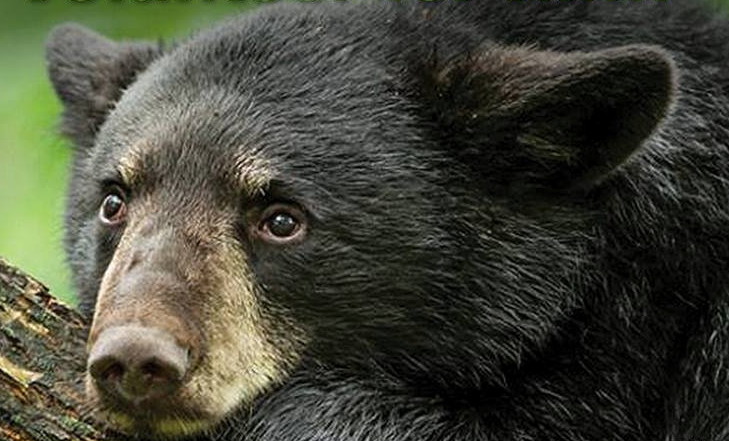
Trophy hunters had cause to celebrate this year: first, inflated numbers of bear incidents provided by officials in charge added weight to calls for resuming the hunt.  Then NJ Gov. Phil Murphy made the hunt official again, lying in the process.  

The result: 330 NJ black bears were killed in six days last month -- and the opportunity for slaughter will continue for six more days in December.  In taking up a primitive pursuit to kill innocent animals, trophy hunters readily ignore any pangs of moral principle or compassion.  Shame should set in, but that’s unlikely: hunting is a sport, after all!

“We were once them, and now are their custodians.”

Deer, though widely admired, are also widely hunted.  And, invariably, media stories urge drivers to protect them during what is their mating season, when deer “are looking for love, not traffic,” as this year’s pitch put it.

Extra careful driving in fall may be, for some human animals, their only humane act on behalf of deer (and to be honest, for themselves too, since they would also be involved in the vehicular mayhem that could occur!).  To avoid a head-on crash, don’t swerve left to avoid hitting a deer, and don’t swerve right, to avoid a ditch, tree or pole. 

Best advice: drive slowly enough to look out for deer along the shoulder.  With time for it, a long honk of the horn might frighten them away from the road.  And too, slow down at “deer crossing” signs and remember that more deer usually follow the first one to cross because they typically move single file in family groups.

“their eyes tell us to keep our promise.”

There’s a continuum of us, the “human animals,” that ranges from those who treat their fellow (wild and domesticated) animals well – who keep their promise! – to the human animals who shamelessly abandon their promise to non-human animals.  (We know them: hunters, trappers, laboratory scientists, officials more intent on profit and pleasing hunters than much else . . . .)

Among the human animals who honor their beginnings with the first animals, a certain kind of individual and organization often stands out: those who act alone or with others who have organized to advocate for animals they were once one with – and in spirit, still are.

Do it now!
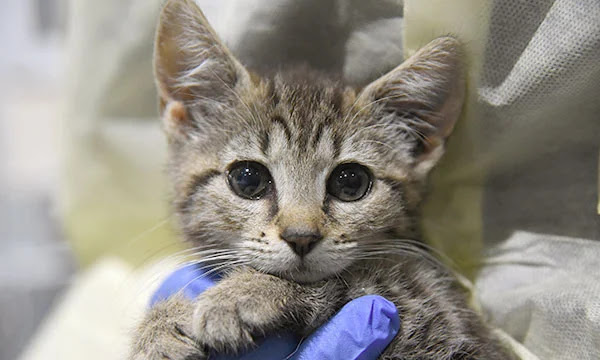
Help manage the booming cat population by getting cats spayed or neutered – and riding there in style!  Buy one or more $5 tickets to the “Rescue Rocks Raffle,” sponsored by the Animal Protection League of NJ (APLNJ).  

Including three prizes and a chance to help selected animal rescues, the drawing’s set for Nov. 21, with winners notified soon after.  Cats will be transported in APL’s KittyKab.   

Please remember:  send a self-addressed stamped envelope with payment ($5/ticket) to APLNJ, PO Box 186, Glen Gardner, 08826.


#

Tuesday, October 17, 2023

'Help needed': our NJ bears, a DC dog & horses everywhere

It took high-level lying and false numbers for both bear population and bear incidents, as well as a Fish and Game Council with hunters in 6 of its 11 seats, establishing public policy for New Jersey!
  No wonder bear hunts have resumed here, despite the great majority of residents against it.

Continuously fighting against bear hunts, the Animal Protection League of NJ (APLNJ) gets anti-hunt and pro-wildlife information out to people through banner protests, billboards and outreach events like tabling.  And two pending lawsuits call for reforming the makeup of the Fish and Game Council and challenging the emergency rule used in the 2022 bear hunt.

Right whale
However, the Murphy administration has acted in bad faith by not trying a single nonlethal method APL has suggested.  Even worse, the governor continues to lie about this issue on his “Ask the Governor” show.   

Major APL efforts, as well, have gone into saving endangered right whales off NJ’s coast, with pitifully little positive response from our elected federal officials.  Given the current political climate, among other obstacles, legislators appear more sympathetic toward fishermen than toward the imperiled right whale – ignoring the Endangered Species Act in the process.

Canada goose
The organization is also winding down on its geese site visits around the state – working, with some success, to win approval for non-lethal methods of dealing with the birds.  APL plans a publication with cutting-edge methods to reduce conflicts and deter geese from nesting.  (More on that valuable guide to follow as it comes closer to reality.)

Helping a dog succeed

For a long time, I’ve read the work of columnist Frank Bruni, appreciating his responses to political and other issues.  But after he adopted Regan, a lovely and loved black and white dog, I grew even more attentive because then Bruni often included her in whatever he wrote.

His take on Regan, their happy relationship and sometimes on dogs in general has been both warm andinformed.  That’s why I paid special attention to his thoughts on President Joe Biden and his latest pet dog in the White House: Commander, a German shepherd who bit at least 11 people before being moved to another address.

Commander
Here’s Bruni’s reaction to the story’s sad ending, including his thoughts on how a happy ending could have happened.          https://tinyurl.com/2skzhy3z       

More horse abuse

Beyond the myriad cruelties horses already endure (don't even think about race horses!), here are two equine abuses that frequently lack enough publicity and protests to be halted. 

Remember those Budweiser Clydesdale horses featured in Anheuser-Busch ad campaigns?  For unknown reasons, the company had long practiced docking (think “amputating”) their tails.

Now, though, that practice has ended, apparently because of criticism leveled at A-B by PETA and other animal welfare organizations.  Obviously, horses’ tails serve a couple of important purposes.  Further, the docking process causes physical pain to the draft horses and Clydesdales involved. 

With the end of horse tail-docking, Anheuser-Busch is claiming that the safety and welfare of its “beloved Clydesdales” is its top priority . . . now.            https://tinyurl.com/yckbdwhs

Walking's a pain

                     A soring step                              HSUS pic
What if this regularly happened to your feet: First, your lower legs would be covered with caustic chemicals, then plastic-wrapped to "cook" into your flesh.  Next, you'd have to weat heavy high-heeled shoes to hide the hard objects jammed into your tender soles, along with metal chains that keep knocking against your sored ankles. 

Your walk would become an artificial high-stepping gait, with every step painful.

This is what happens to horses who are involuntarily part of show circuits for Tennessee Walking Horses and related breeds.  Efforts to halt the practice have been insufficient and intermittent, although lately hope for reform has grown. 

With proven failure by the industry’s self-policing, the USDA may now appoint trained, objective inspectors who should make a significant difference for horses.  We’ll see.   https://tinyurl.com/4225mau3 & https://tinyurl.com/45fucm52

Newbie no more

Jersey
Jersey Summers marked his first anniversary last Sunday: for this 2nd cat in the family, it's been one year since adoption day, when he was estimated to be 9 years old.  So his anniversary also became his 10th birthday.  Congratulations to all of us!   

Elephants in your heart?

If you care about keeping elephants in our world, here’s a wonderful short video thanking you for that belief and for any help you’ve given.  It will warm your elephant-loving heart!      https://www.youtube.com/watch?v=Belw3YGKyqo

                                                                                    AMNH image
#


Sunday, October 1, 2023

Bears in jeopardy, looking at platypuses, a cat's job & elephant show coming

NJ black bear 
That Gov. Phil Murphy has once again gone back on his word to stop black bear hunts in New Jersey, and that his latest deceptive decision is based on false numbers and a false sense of urgency has already been said, although it bears repeating, for our bears’ sake. 

On this and many other issues, Murphy is not to be trusted.  Problem is, he can call the shots.  So now, as the Animal Protection League of New Jersey (APLNJ) says,

We understand Governor Murphy acted in bad faith and showed his true character when he reinstated the bear hunt.  This fact does not preclude us from exposing the lies, the sham, and the truth.”

APLNJ urges those against this latest projected assault on our black bears – the great majority of NJ residents! – to make their voices heard.  Start this way: Tweet on X@GovMurphy #SaveNJBears.  Tell him to do the right thing and cancel the hunt.  Last time, the “emergency" hunt, the bear population estimate and the bear complaints were a sham that led to the deaths of 114 bears: Lives for trophies!

On APL’s website (APLNJ.org), scroll down past the opening about whales to the “New Call to Action for the Bears” and click on the bear advocacy page to read expert opinion on bears from the Bear Group, an APLNJ program.  Talking points there are invaluable arguments against bear hunts here.   

Platypus protection   

It started with the first nautical-history novel (Master and Commander) in Patrick O’Brian’s series set during the Napoleonic wars and following the lives of a ship’s captain and ship’s surgeon – two good friends.  Fascinated, I sailed through all 20 books. 

In one of them, I joined Stephen Maturin, surgeon, naturalist and spy, in meeting up with a platypus – a strange creature wholly new to both of us.  Unaware of the secret weapon the male platypus possesses – a protective poison spur on his heels -- Dr. Maturin was stung and seriously injured, requiring long recovery time.  

Startled by that event, I looked into platypuses.  Yikes!  Hoping that as native to Australia, they stay there -- or at least the males do.     

With a duck bill, webbed feet and waterproof fur, the aquatic platypus suggests a strange composite animal.  It ranges in length from 15-24 inches and weighs from nearly 2 to more than 5 pounds.

Dog-as-platypus  
Platypuses are the only mammals able to produce poison and just one of two living “monotremes”—creatures that lay eggs rather than bearing live young.  (Also from down under, the echidna, or spiny anteater, is the other.)  Like other mammals, platypuses have fur and produce milk to feed their young.

‘Billy the Great’

Since Jersey joined us last October, my reference to either family cat has usually been to him, the insistently unique newbie in the family.  But this time, Billy gets the spotlight because he too has unique qualities . . . like being a life-long “great white (and black) hunter.”

Believe me, “great” in this context is accurate.  While now 16-½ years old and slowing down a bit (though not in his devotion), Billy has always been the in-house pest-exterminator, a job he does matter-of-factly and with vigor. 

 Billy Summers

It began, and continues, with flies.  Let one manage to get inside and Billy is on duty till he dispatches it (yum!).  Same with uninvited crawling bugs.  

A few days ago, his reach exceeded his grasp: Before I even saw it, Billy dove at a grasshopper right outside our front screened-door, which I was opening.  He was inside and the ’hopper was outside, with four free inches between them.

My closing the door killed Billy’s dream, even though he scrabbled at the area for a frustrated while longer.  Happily, I didn’t have to witness his handling of the grasshopper.  Or vice versa!     

                                                               African elephant                                   AMNH image

Merely the space devoted to them here would leave no doubt that I love elephants and fear for their future.  And now, answering my unprayed prayer, New York’s American Museum of Natural History (AMNH) -- site of the recent, much-extolled “Sharks” exhibition -- announces “The Secret Lives of Elephants.”

Opening in mid-November, it allows us time to plan a visit and reserve tickets.  And you can be sure that regular reminders about this great-sounding show will appear in blog posts here.

Elephant ear of the botanical kind


Sunday, September 17, 2023

Insects & other animals just soldier on

Marked by undependable, unseasonable and violent weather, the summer of ’23 was notably un-lovable, with catastrophes taking place seemingly everywhere in the world: fires, merciless heat, extreme storms, earthquakes, dam breaks and floods added to the “usual” crime and virus rates, and (understandably?) continuing mental health issues.    

Howdy Doody in transit
No wonder the media often opted to dwell on oddities and frivolities like the 2,200-pound pet steer being taken for rides in a converted police cruiser, with his colossal horns dominating the windshield area.  https://tinyurl.com/ycyb5zc3  Or the “portrait” of the Mona Lisa painted on the side of a barn. https://tinyurl.com/2b77zn6w   Such pastimes were welcome changes from topics like politics and even weather.

But then, to my great disappointment, there were no takers to my previous-post appeal for creative constructions from cat food cans.  Other cat parents simply must still be emptying those cans and tossing them, without any glowing light bulbs to motivate them toward greatness. 


One huge summer success came earlier this month: the Insect Festival that Mercer County’s master gardeners put on once again.  Despite muggy weather, these committed people – many dressed as butterflies or bumble bees – displayed insects of all kinds (good and bad), staffed stands with information about related topics and were on hand to answer the myriad questions I overheard while wandering around, amazed and appreciative. 

If you didn’t get there this year, please: vow now to be there next September! 


And speaking of sharks (weren’t we?!), here’s an image from the recent exhibition at the American Museum of Natural History (AMNH) that I couldn’t fit in earlier.  Since it’s still summer and some lucky people are still swimming, here’s a humbling comparison for anyone who works out in deep open water.

                                                                                         AMNH imge

An ancient species, sharks are now in decline for a well-known reason: the Anthropocene, of course: the “current geological age, viewed as the period during which human activity has been the dominant influence on climate and the environment” – or, more simply: the age of human destruction of virtually all things good and beautiful.  https://tinyurl.com/4vfzmjtb


Another needlessly threatened and declining ancient species is one New Jersey beach-goers know well: the horseshoe crab.  What people don’t commonly know is that for decades these crabs have been “harvested” so their blood can be used for testing injectable medicines and implants for toxins.

Horseshoe crab
And that practice continues today, even though alternative synthetic tests are available.  Sure, it can be hard to change practices long in use, but this one can and should be stopped if for no other reason than respect for horseshoe crabs, who have survived for so long in a world increasingly dangerous for them. https://tinyurl.com/cmfh5we8

It doesn’t stop there either: They're also killed for food in Asia, besides for their blood, as well as used for bait by fishermen and fertilizer by growers.  There it is again: Dominionism, or humans acting on the belief that the world is theirs to use as they wish, to despoil. 

Armadillo
False entitlement!    https://tinyurl.com/3btzcuf7

But take heart! There’s a flip side to all the horror going on now, and our believing that's true could start with reading this column by a stubbornly positive woman who writes so convincingly: 

I can’t tell you how much delight I take in watching a young animal’s deep pleasure in existence, enjoying the power of its beautiful young body in a beautiful old world. . . 

The fallen world — peopled by predators and disease and the relentlessness of time, shot through with every kind of suffering — is not the only world.  We also dwell in Eden . . . ." https://tinyurl.com/yk6ucdjk

After reading it, do you agree?  


# 

Monday, August 21, 2023

Selected end-of-summer animal news briefs

Cricket
Despite fewer fireflies in my area this season, the summer singers are coming on strong, and I’m happy to hear them.  Among the insect carolers, cicadas are day-timers, while crickets and katydids perform at night.  (Grasshoppers are often mentioned as chorus members too, but I don’t know when they get going or how they sound.) 

Insects are the big attraction at a September 9 festival all about these creatures we couldn’t do without.  An area event (Pennington, NJ), the festival guarantees fascination, if you trust my reactions in previous years.  A standout to me was a live Madagascar hissing cockroach (2-3 inches long), among other attractions. 

Madagascar hisser
So much for positive terrestrial news.  Meanwhile, in coastal waters off New Jersey, (many) pods of (many) dolphins have been reported.  With growing activism to protect right whales in the same waters, the dolphin presence is happy news. 

Then there are sharks, featured in my last post here as threatened, rather than threatening.  Of course, this was bound to happen: One shark missed the memo, and soon after, a woman swimming off Rockaway Beach, Queens was badly bitten by a shark.  (She has had surgeries and will survive.)  https://tinyurl.com/mvs5z65b

Two more aquatic news briefs: First, the American Museum of Natural History, where I recently went for the shark exhibit, is showing a film on blue whales – the world’s largest animals -- on its big screen.

Blue whale

For serious whale-ophiles content to watch it on home devices, it’s also available on YouTube.

https://www.youtube.com/watch?v=JR1vVqk2BZY

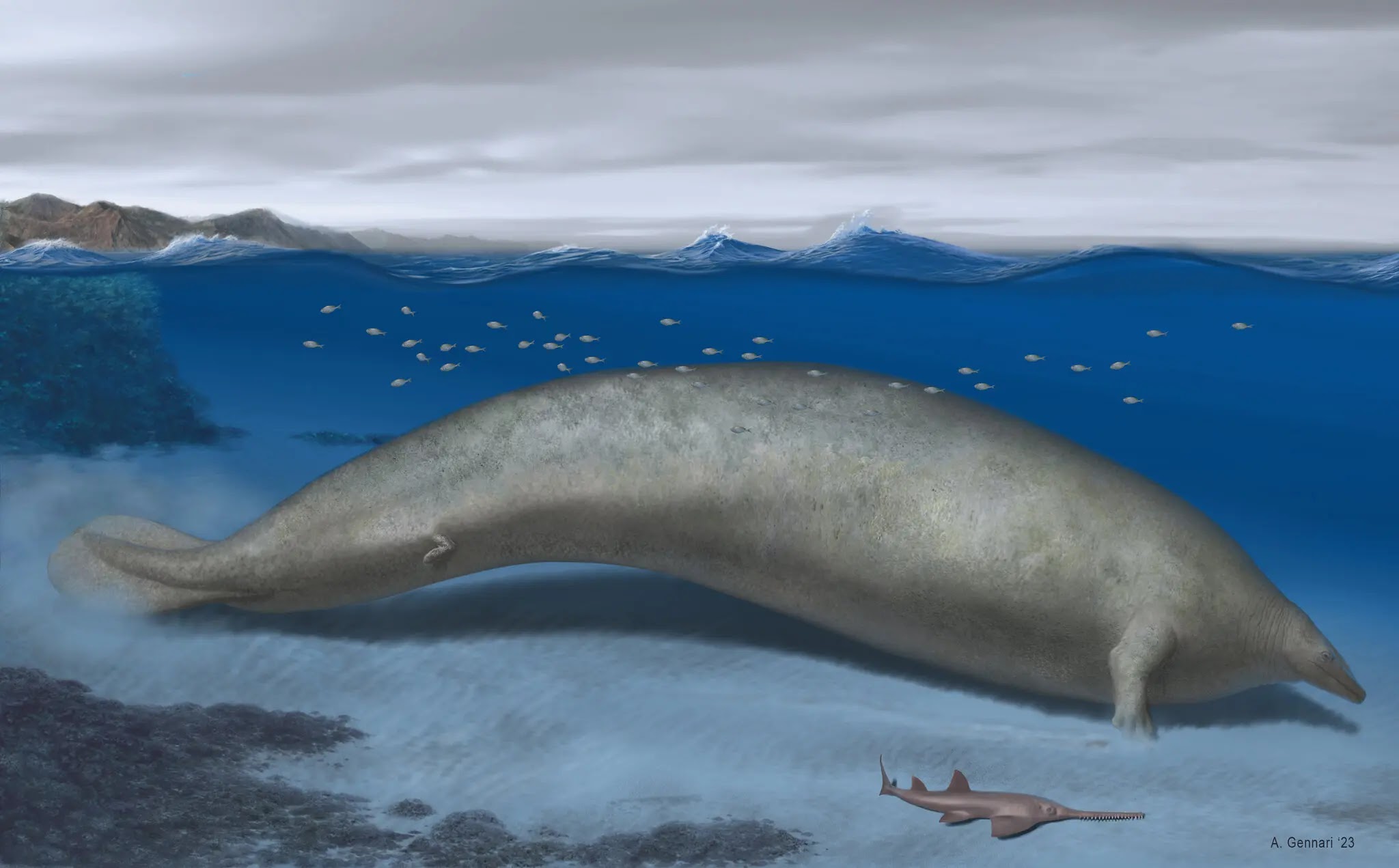
And, following up on coverage here of the long-extinct colossal shark, the megalodon, still another ancient and extinct sea creature made news recently: a giant whale closer in appearance to a manatee than to whales as we think of them, who lived some 39 million years ago. 

Thought to rival blue whales in weight if not appearance, Perucetus is believed to represent “an early branch in the evolutional tree of whales,” with a small head, paddle-like tail, big, barrel-shaped middle and the look of tiny arms.  Like “a mammoth manatee,” it’s theorized to have “drifted lazily through shallow coastal waters” – a dramatic contrast to today’s sleek, fast-swimming divers, the blue whales. https://tinyurl.com/939v93s6

Ancient, extinct whale
For me, the most surprising fact in the story was that whales evolved from dog-sized land mammals about 50 million years ago: wholly aquatic whales came after that.

Maui disaster, black bears, animal hero & poor pigs  

Maui is on our minds since the horrific wildfires there.  Human interest stories all over the place, and finally one about Maui’s animals, including pets.  Everything happened so fast and, for many people, so inescapably – all even moreso for island animals.  Here’s one early overview.   https://tinyurl.com/chkp6jrh

Closer to home (and New Jerseyans’ hearts), another animal made the news recently: New Jersey’s black bears.  With the announcement that bear hunts will resume, Gov. Phil Murphy totally abandoned any semblance of his pre-election pledge to stop them.  There’s so much to say and do about Murphy’s political treachery, all bound to start next month.  Be ready!

"Life" for many pigs
Two newspaper columns this summer deserve mention and being read.  The earliest, about Peter Singer, described how long this philosopher-professor-activist-author has been writing and acting on behalf of animals.  His story and its results are worth knowing about and utterly awe-inspiring.  (His newest book, Animal Liberation Now [“The definitive classic renewed”] is available.)   https://tinyurl.com/3b7ues84

The second column is about pigs, mercilessly victimized by humans . . . forever, it seems.  Long before chickens came to be seen as “people food,” pigs were on the menu.  Their lives today are described in this column: https://tinyurl.com/ya7v56hz

Take a break!

To make the most of season’s end, savor summer singers while you can (We’ll really miss them next January!), enjoy dolphins at the shore and do your favorite things.  Time-out time for me starts right now -- back next month.


#

To comment on this or any blog post here, please go to 1moreonce.blogspot.com.


Tuesday, August 8, 2023

Sea-monster appeal & a worldwide holiday

It’s a monster, swimming right toward you!  It’s at least 50 feet long, with teeth that won’t quit, in a giant mouth you could stand upright in . . . briefly.  It’s “the biggest predator fish of all time”: a Megalodon!

But not to worry: this beastie has been extinct for 3.6 million years.  It lived ages before people, dinosaurs and even trees.  Its shark ancestors evolved 450 million years ago and survived four mass extinctions, including the one that killed most dinosaurs.

The question is, whether today’s sharks can survive the next mass extinction – the one caused by humans.

All of this is why New York’s American Museum of Natural History (AMNH) now features a shark exhibit, starring sharks prehistoric-to-present . . . with an uncertain future.  The Megalodon figured prominently in the long line of sharks (but, thank the power, not in our present-day waters).     

To simulate that frightful fish, the museum constructed a model of the first 30 feet of its length, with its giant head facing those entering the exhibit, which also includes more models, both moving and still images and text about sharks of all kinds in all history. 

(Reading about that “Meg model” in the works long ago fascinated me, prompting numerous references here to that fish, its kin and the museum’s shark exhibit.  In late July, I finally got there to see it all for myself: a thrill of a trip.) 

The exhibit’s interactive displays show (1) why sharks are such good swimmers (calling for equipment we don’t have: fins and a tail); (2) comparative danger to humans of sharks and other creatures (mosquitoes were clearly the most dangerous); (3) today’s three most dangerous-to-people sharks, who are behind most of the 10 or so annual deaths from shark bites; (4) what makes the great white shark so deadly; (5) how to fend off a shark. 

These days the shark to fend off would not be the whale shark, at 65 feet long, but the great white, now the biggest and most powerful predatory fish on earth.  Able to reach 21 feet in length, it comes with  about 300 huge serrated teeth and myriad killer skills.  

The saddest Q & A of the exhibit: why are sharks now endangered?  They’re killed as “bycatch” in nets and long lines; they’re killed for their fins that go into soup; and they’re killed through sport fishing, pollution and climate change.  A fate so horribly undeserved.  

(“Sharks” runs at the AMNH through Monday, Sept. 4, 2023 (Labor Day). Visit AMNH.org for details on the museum, its exhibitions and buying tickets.  Museum entrance requires a timed ticket, with an additional exhibit fee.)  

D.C. 'biter dog'

Poor Commander, the German shepherd who lives with the Bidens in the White House and the latest pet to have bitten people.  Was it his nature or his situation?  Will he be moved away for rehab and/or a calmer life?  Here’s what one columnist, cited here before, has to say about why dogs bite.   https://tinyurl.com/3au5strd


Arts & crafts 

I’ve seen art shows of objects made from trash or warfare memorabilia (“Trench Art”!).  Now how about a new and plentiful material for creative people to work with: 3-oz. metal cat food cans?  They clatter around in a recycle bag before pick-up day, then they’re gone.

Given a second life (after all, cats have nine of them), what could these cans become or be used for?  Could they somehow provide enjoyment -- beyond what their contents have already done?

If you can make it happen, please do.  Send me a photo of your creation made from cat food cans and I may show it here.  

Home boys

Two kids who know and love the sound of a cat-food can being opened are Billy and Jersey Summers.  And beyond that, they love the cans’ contents, both their own and each other’s. 

Jersey, for instance, seems to know from another floor when I’ve left the kitchen or even turned my back on the two bowls in different corners.  Suddenly, he’s working out on whatever Billy had left for a return visit.  

And Billy will casually saunter over to nose around in Jersey’s bowl, ostensibly on his way from the water bowl.   “So it goes”. . .    


#


Monday, July 24, 2023

Bugs, birds, new ‘real’ chicken & tourist-scofflaws

Summer night, alight
Earlier this month, I realized I didn’t see a single firefly during June (and still not yet, nearly August). Will I ever see them again?  Are those softly glowing beetles also known as lightning bugs vanishing or not? 

The quick, if not definitive answer, is no!  A recent media story and an online program were both reassuring about these bioluminescent creatures who flash to communicate among themselves and to find mates.

OK, bugs: show yourselves!

Another beetle, btw, is given credit for pollinating big-leaf magnolias, an ancient deciduous North American tree that evolved some 95 million years ago, long before bees even existed!  Its flowers are the largest in the US.

Spoiler jays & birdbaths

Bully in birdbath
Which leads up the range of creature sizes to birds, where there’s good news and bad news.  The bad news, which won’t surprise the most casual bird watcher: local blue jays – as in my back yard where 2 suet cages were still maintained -- spoiled snack possibilities for all the other area birds. 

After a few days of hearing and seeing the jays’ bullying, I took both cages down.  Bagged in plastic, they’re secreted in my freezer to try again (when blue jays are on vacation?).

On to the good news.  It’s all about birdbaths and it’s greatly helpful.  Just plunking a birdbath outside somewhere and assuming birds will come is not enough.  The article linked below recommends a concrete birdbath, possibly tiered, with rocks in it, and with fresh water at least every day – and of course the story includes excellent reasons for these moves.

That’s not all.  Since finding clean, fresh water keeps getting harder for birds (and other wildlife), multiple birdbaths of varying heights could become vital resources for them.  As would “hydration stations” for pollinators like bees and wasps, and even for squirrels and chipmunks. 

Possibly best of all: the story’s delightful videos of birds (delightedly) bathing!      https://tinyurl.com/56ed5m48

Chickens, rejoice!

Now moving up the “size line” to chickens, how would you like a chicken sandwich?  A “cell-cultivated chicken” sandwich, that is – also known as “cultured meat” or “lab-grown meat.”

Which all means that this meat doesn’t come from slaughtered animals!  And as the AP story says, such lab-grown meat “aims at eliminating harm to animals and drastically reducing the environmental impacts of grazing, growing feed for animals and animal waste.”  The potential for good, in so many ways, is simply colossal!

Worth stressing: this “new” chicken is meat, not substitutes like plant-based “meats.”  Even better: companies all over the world are focusing on meat from carefully selected animal cells, including pork, lamb, fish and beef. 

The “lab-grown meat” movement will have to start small.  Right now, “cultured meat” is very expensive to make and because of limited production, will be served only in exclusive restaurants at first.  Consumers will probably wait years before seeing it more widely available.  

But, at a time when the HSUS recently reported that “More animals than ever before—92.2 billion—are used and killed each year for food,” something wonderful is starting to happen for animals: the hideous, inhumane and soon unnecessary factory farms and animal slaughter will finally end. 

Troublesome tourists

Bison
“People who approach wild animals aren’t brave; they are deluded.”  Yesterday’s Washington Post story excoriated tourists involved with more and more inappropriate and unsafe contacts with wild animals.  With such actions, they risk their own lives and those of the animals involved.  

Tourists offer spurious reasons for flouting rules and endangering animals they should only observe and appreciate . . . from a safe distance.  When people take chances and ignore rules, too often the animals pay for humans' idiocy. 

In its second part of “How to be a humane traveler for animals,the HSUS addresses the same issues.  Effectively, we hope!     https://tinyurl.com/7fjd2ma3

Family resemblance

And on a happier note, here’s a family reunion complete with a beautiful group picture.   https://tinyurl.com/3u9d5jv4

#