Tuesday, September 10, 2019

Still searching for animal heroes -- & finding some

                                                                                                                                                                              Dodo image
As there have been horrible frights and losses from Hurricane Dorian this month, there have also been heroes, thank the power.  One such person was the Bahamian woman who gave shelter to 97 homeless and abandoned dogs in her home.  Try to picture it: 97 dogs!  And the images with the Dodo story showed large dogs.
“The wind sounded like a train that wouldn’t pass, it was so loud, water was coming in through the seams on the windows and underneath the doors, the dogs were scared. I tried to play with them, sing to them, gave them every last treat just to keep their minds off all the noise of the hurricane.”  --Chella Phillips, dog host who manages the Voiceless Dogs of Nassau, a group dedicated to saving the island’s stray dogs.    
Besides a wealth of treats and lots of drinking water, that takes grit -- and true animal love! 
 
Far from Dorian’s destructive path, another hero leaves a bowl of fresh water outside every day for his city’s animals.  One day he attached a camera to the bowl to see who came.

"Not only was it cats and dogs, but a crow and butterflies came up to have a drink too," reported Aahmet Selki, of Turkey, who added, “. . . we are responsible for all the animals. We destroyed or shaped the whole planet in the direction of our needs.  It's time to think about the other species too.”

                                                                            Dodo image
Water: it's necessary for life.  A truck driver in Brazil knew that when he stopped to help an armadillo in distress with a reviving spray of water.  And left a banana for the animal before driving on. 

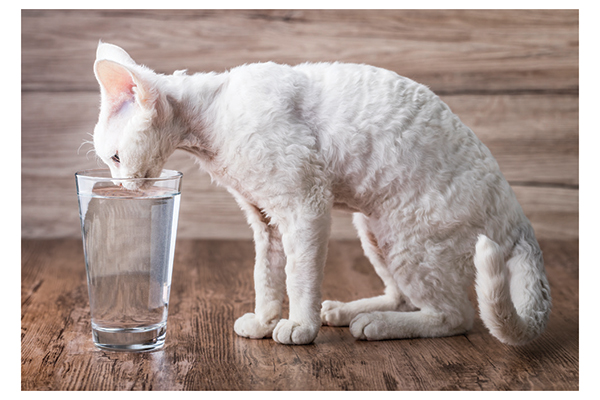
On a much smaller local front, we cat-loving owners can be heroes to our cats who don’t drink any or enough water, by checking out these 10 Catster tips for hydrating felines.  Dehydration in cats can be deadly:  it can be tied to urethra blockage and urinary tract infections and crystals, as well as digestive health.   

Inducements for cats to drink water range from wet-food diets to number of bowls, and from bowl placement to added tuna juice.  
                                                                   Catster image
Candidate Castro’s popular plank

How very refreshing -- and welcome.  Julian Castro, a Democratic presidential candidate and former secretary of housing and urban development, last month unveiled his animal welfare plan. 

Concurrent with the Trump administration’s assault on the landmark Endangered Species Act -- “the law that brought the bald eagle, the humpback whale and the grizzly bear back from the brink of extinction,” as the Washington Post put it -- Castro has made a detailed animal welfare plan part of his platform, and it includes strengthening the ESA.

His ideas include ending the euthanasia of healthy cats and dogs in shelters, making animal cruelty a federal crime and expanding U.S. protected lands. (issues.juliancastro.com/paw-plan/)

Disservice to Dogs

So now the US Postal Service is in on it too: “honoring” so-called “military working dogs” for their courage and loyalty by issuing a first-class stamp series with images of four breeds.  It’s all so altruistic and patriotic -- and wrong. 

Dogs don’t enlist or aim to “work" in humans’ wars.  They don’t seek the chance to sniff out bombs or perform any of the other dirty-work things people train them to do.  And they sure don’t seek a hero’s death (or the silly medals they’re sometimes awarded, posthumously).

Dogs should be free to live dogs’ lives.  Period.

Think involuntary “cannon fodder” . . . and boycott these sick stamps.


No 'military working dogs' need apply


#


Your comments are welcome. Just go to 1moreonce.blogspot.com and have your say.   

Wednesday, August 28, 2019

It takes diehard advocates to make ‘feel good’ news for animals

Capybara
A recent blog comment mentioned “feel good” news here with appreciation, as if that’s a rarity.  Well, it is!  Isn’t media focus usually on the unconventional-to-bad news?  Don’t headlines usually scream the same things (to those who still read newspapers)?  So-called “good” or “feel good” news really is the exception, isn’t it?

However true, that’s a huge shame. But consider: how long would we read or watch “feel-good news” with interest?  Wouldn’t it become ho-hum? even saccharine?

In the world of (non-human) animals, alas, bad news seems to prevail. Maybe it’s about helpless animals on factory farms (certainly no good in that!) or the latest plans for a deer hunt, or abuse of a pet.  And we haven’t even gotten to elephant, rhino and pangolin poaching, or the myriad other horrors animals are subject to around the world.

It can seem that (non-human) animal life is fraught with peril and death.  And to the degree that’s true, we keep reading and seeing “feel bad” news about animals.  Remember human entitlement?  the belief that we have dominion over all other creatures?  Far too many humans still subscribe to that outlook.

The very best news of all in animal reporting deals with those who aim to counter the hateful things done to animals by working for animals -- the animal advocates of all kinds (volunteers, legislators, donors . . .) who press for humane treatment of animals, who remind us of our values, who keep up the fight to improve the lot of animals -- which continues to be sorely needed!

Jaguar
Whether individuals, groups, state or national organizations, the animal advocates I’m speaking of are the ones who give us hope and invite us to join their rescue operations.  In reminding us of what’s possible, they recruit the “better angels” in us.  Their doing so is more important than ever now, with cruel, uncaring people in power, eager to strip away animal protections and penalties for offenses against animals.

In earlier blog posts here I’ve written, admiringly, about a few people who take specially good care of animals.  I want to learn about and talk up many more such people!  Now, with summer nearly over and school starting soon, it’s time for animal advocates to share their plans, appeal for support, enlist helpers and get going!  

Rain forest animals

The thousands of fires now burning in the Amazon rain forest are catastrophic for the millions of humans who live and work there, for people the world over and for the world itself.  The fires also terrify and jeopardize the more than 2,000 species of animals living there, who must somehow deal with this horrific situation to survive. 

Tapir
The Dodo story linked here outlines ways to help animals in the Amazon: (1) donate, (2) get involved, and (3) consider what you eat.  (That last section is lame, I think, doing little more than suggesting at least one meat-free meal a week.)

Worth remembering: the Amazon rain forest is considered “the greatest reservoir of fresh water and biodiversity on the planet.”  It’s home to 1 in 10 animal species on earth.  It must be saved!
https://www.nytimes.com/2019/08/26/opinion/amazon-rainforest-fire.html?em_pos=small&ref=headline&nl_art=9&te=1&nl=opinion-today&emc=edit_ty_20190827?campaign_id=39&instance_id=11932&segment_id=16511&user_id=a360dad7b26df61ea65737080d3deedd&regi_id=20760274emc=edit_ty_20190827

‘Do what I say, not . . .”

I can’t help feeling a little smug right now because I scooped the Times of Trenton -- which had published that ridiculous story about former Gov. Christie and his civility project (see previous post) without accompanying editorial criticism.  In contrast, I read it, disbelievingly, and reacted in print asap. 

But yes, the Times did later editorialize on the gross hypocrisy and cowardice of Christie’s initiative.  I wonder whether Christie read it. . . !
https://www.nj.com/opinion/2019/08/chris-christie-like-melania-trump-calls-for-civility-editorial.html

#


Please comment on this post!  Just go to 1moreonce.blogspot.com to react.        

Monday, August 19, 2019

The ‘silly season’ lives on, with both human & bovine animals

                                                                             Catster pic

There used to be a summer “silly season” in journalism, when legislatures were on break, people were on vacation and serious news was hard to come by.  Readership fell off.  What to do?   Newspapers used attention-grabbing headlines and off-beat stories to lure readers and advertisers, and make it through the dog days of summer.

Although silly seasons long ago faded away and news cycles nowadays are practically instantaneous, almost every day’s newspaper still brings silly season-style stories.

Here’s such a story, about a human animal, that I couldn’t resist.

Just last week, with editorial straight face, the Times of Trenton ran a story about how former governor Chris Christie will soon unveil “the Christie Institute of Public Policy” at Seton Hall University School of Law, Newark.  Its goal: bring civility to today’s politics.  

It is to laugh -- but you have to have been familiar with Christie’s public persona during his two terms to fully appreciate the humor.  Two other facts from the silly story: Seton Hall is Christie’s alma mater, in case you wondered, and “the institute will not focus on New Jersey politics,” the story said.

Enough of that silliness -- or hypocrisy.  Next, Christie may offer workshops on ending bear hunts. 

On to a non-human animal: the cow.  Typically calm, self-contained and non-threatening, cows have
                                                                             NYTimes pic
lately become therapists for humans. Their placid, non-judgmental nature, their stillness, their approachability. . . all these traits have recommended cows to people wanting to hug, pet, brush and confide in them. 

“Cow cuddling”:  It has a warm and welcoming sound, doesn’t it?  And it’s happening on a farm in upper New York State, where for $75 an hour per couple, people can spend time with either Bella or Bonnie, hugging, cuddling and conducting one-way conversations. 

This often happens on the ground because contented cows prefer lying in the grass to chew their cuds.  So, if the cows drop down, humans hunker down with them, where it’s easier to hug, anyway. 

The couple who own the farm heard of this practice in their native Netherlands during a recent visit home.  They bought two gentle, horn-free cows to become therapy animals, adding to their bed and breakfast offerings.

                           NYTimes pic
Maybe this could become a future “career” for cows saved from slaughter as “meat-free meats” grow more popular.  Then again, whatever they might be doing, cows would still be the source of methane, a powerful greenhouse gas, in fearful quantities. 

(Cows to the contrary, I’m persuaded that therapy begins at home, with two loving, highly huggable cats who listen, look concerned and hang in with me till the rough patches end.  And, unlike cows, they don’t emit methane.)

Moving away from the silly season into the gratuitously cruel one, there’s Arby’s reply -- or nose-thumbing -- to the meat-free meat movement: its meat-based carrot, or “Marrot.”  Essentially turkey meat with a glaze, Arby’s “megetable” looks like a carrot and reportedly has much of its nutritional value.

This concoction is simply needless and cruel, especially for turkeys.  Just what the world doesn’t need right now is more opportunity to consume animal flesh. 

(“. . . filet mignon is nothing but a piece of cadaver under cellophane.” -- Brigitte Bardot, in Tears of Battle: An Animal Rights Memoir)


And just what the world does need right now is fish-free fish!  Well, it’s in the works, and why not?  Commercial fishing is accused of strip-mining the seas, hugely depleting the world’s fish stock, and we’ve clogged the oceans with plastics and other sea-life killers.  It’s time for seafood alternatives.  

One such substitute, Good Catch tuna, is available right now at Whole Foods, and it has reportedly inspired tuna melt binges.  If we’re slowly moving toward terrestrial meat-free foods, why not do the same for fish?
#


                                                                                           Catster pic


Your Meows or Moos or You Name Its are always welcome.  Just go  to 1moreonce.blogspot.com and let us hear from you!

Monday, August 12, 2019

People & animals can be mutually beneficial


Do you say “Ah-h-h-h-h!" or "Ug-g-g-g-g-h!" at the thought of the “dog days of summer”? 

                                                                                              AccuWeather pic
Much preferring heat and humidity (and a swimming pool) to the perpetual shivers of winter, I’m OK with the sultry days named for Sirius the Dog Star.  When Sirius rose with the sun in July, some ancients believed this added heat to the day.  And so, that high-season weather became known as the dog days of summer.

Such weather can definitely bring out the best in  people.  For instance, “G,” the handyman I know and admire, who drives 2 or all 3 of his rescue dogs with him to a job site.  Once there, he leaves his truck engine running so his pals stay cool in the cab.  He shrugs off his great good deed as if there were no other alternative.

That’s true animal advocacy.

Now consider “S,” a career cat specialist, who, besides her phone-consult time, attends to 8  formerly feral kittens who live temporarily in her large (thank St. Gertrude, patron of cats) bathroom with a mom cat until they find homes; 3 family cats and a 4th  needing to be isolated.  And did I mention her human family of 4 others? 

That’s all kid stuff to “S.”  After weeks of planning, she has begun to build a catio for Spot, who has feline leukemia, and for other felines’ sake, lives alone in the capacious (thanks again, St. Gertrude!) house.  However, he’ll soon have his own custom-made indoor-outdoor space -- and share it with another cat “S” plans to find with the same diagnosis.

The dog days of summer should be so good for all animals!

(BTW, if you know of other good-for-animals deeds people are performing, please let us know about them via a comment here, and thanks!)

T. rex approaches

Moving even further back than the ancient origins of the dog days of summer, we come to Tyrannosaurus rex, resident of earth 66 million years ago.  The US Postal Service has announced the issue of a set of 4 T. rex first-class stamps at the end of this month.

One image shows T. rex as a fluffy (!) infant; the second, as a hunting juvenile; and the third as a full-grown predator. The fourth shows a T. rex skeleton at the Smithsonian.

As “forever” stamps, always good as first-class postage, the T. rex foursome is both fearsome and colorful.  All the kids you know who are into dinosaurs might love to receive something in the mail with such a stamp.  (“Collect all four!”)

A year-round read
   
I wonder how Sy Montgomery, my latest discovery on the subject of animals, would relate to a T. rex. After all, she has befriended such creatures as tree kangaroos and emus, a giant tarantula and an octopus, besides more predictable animals in our world.  

She writes about all of them in How to be a Good Creature: A Memoir in Thirteen Animals, her beautifully written, designed and illustrated book (Houghton Mifflin Harcourt, 2018) -- with themes that include the otherness and sameness of people and animals, and how we learn to become empathetic.  

In short, Montgomery says, “Knowing someone who belongs to another species can enlarge your soul in surprising ways.”  


“We need another and a wiser and perhaps a more mystical concept of animals. . . . For the animal shall not be measured by man.  In a world older and more complete than ours, they move finished and complete, gifted with extensions of the senses we have lost or never attained, living by voices we shall never hear.  They are not brethren, they are not underlings; they are other nations, caught with ourselves in the net of life and time, fellow prisoners of the splendour and travail of the earth.”  -- Henry Beston in The Outermost House (1928)


#

Your comments are always welcome.  Simply go to 1moreonce.blogspot.com and have a say!

Wednesday, July 31, 2019

Musings on a new hairbrush . . . & summer love songs

Wild boar
A hairbrush with boar bristles, as in “boar,” or wild pig.  As in, the boar didn’t donate those bristles, so I have to assume this brush and others like it, made in China (why am I not surprised?), involved killing boars for their bristles, and probably their meat and other body parts too.

This is China, remember, the country that not long ago was the world’s major consumer of elephant ivory -- also not donated by elephants, but coming to China indirectly, as in smuggled from Africa through other countries after the elephants had been killed by poachers for their tusks.

Although to some extent, China has recently gotten religion on the subject of ivory, its lust for rhino horns and pangolin scales and lion bones and tiger parts continues for use in Eastern medicinal practices (with no proven efficacy).  Whether stated or not, animals are still seen in China as objects that exist for human use.  Eastern religions may not preach human dominion over animals -- maybe Genesis (1:26) has a lock on stating that belief -- nonetheless, people in those countries are living the belief.  

Consider pigs, for instance: animals bred en masse to be killed and eaten.  Since “African swine fever” broke out in Asia, millions of pigs have had to be killed.  Horrors!  No, not from compassion for the animals, but grief over lost income. https://www.google.com/search?q=pig+disease+%2B+Asia+%2B+culling&rlz=1C1VSNG_enUS691US702&oq=pig+disease+%2B+Asia+%2B+culling&aqs=chrome..69i57.9543j0j4&sourceid=chrome&ie=UTF-8

“I never met a pig I didn't like.  All pigs are intelligent, emotional, and sensitive souls.  They all love company. They all crave contact and comfort.  Pigs have a
delightful sense of mischief; most of them seem to enjoy a good joke and
appreciate music.  And that is something you would certainly never suspect
from your relationship with a pork chop.” 
― Sy Montgomery, naturalist and author (1958-   )      

Still on the subject of human-used animals, just think about silk, a Chinese invention based on the threads of silkworms. Moths lay eggs and worms hatch, eat mulberry leaves till they’re fat, then spin cocoons.  Cocoons are steamed to kill the growing moth inside, then rinsed in hot water to loosen the fibers, which are combined into threads, which in turn are woven into cloth: silk.

California condor 
But we can’t be too righteous about China’s sins against animals.  After all, we’re the ones who killed off American buffaloes and drove majestic California condors -- North America’s largest flying bird --  nearly to extinction.  (Now in gradual recovery, they’re still endangered by lead exposure in carcasses (lead ammo must go!) and consumption of junk in their habitats (humans must clean up after themselves!).    

Seductive sounds

Cicada
On to a happier and much noisier subject: the sizzling seasonal sounds of . . . bugs.  Specifically, cicadas, crickets and katydids.  We hear them in alpha-order, with male cicadas buzzing during the day, singing to attract females by vibrating a special membrane in their abdomens.

Male crickets rub their wings together to produce their chirpy mating calls late afternoon and evening, while katydids rub their front wings together to "sing" to each other late at night in bursts of two, three or four notes.

Cricket
Nor are these three insects the only ones we hear these steamy days and nights.  Rubbing a hind leg against one of its hard front wings, a grasshopper also makes sounds, and for the same purpose: courting and mating.  

It’s a buzzy, chirpy world out there during these “bug days of summer.”  But as temperatures drop, the seasonal sounds lessen and are usually gone by October.  It's sad.

Katydid


#

Your comments are always welcome.  Simply go to 1moreonce.blogspot.com and have a say!

Saturday, July 13, 2019

We emotion-sharing animals save one another

“Mutual Rescue”: doesn’t that sound appealingly two-way?  Many of us are, or try to be, animal rescuers.  But in fact, helping an animal often helps us at least as much as the animal.

That’s the title-thesis of a book I mentioned here (May 12 post) as one of three new books animal people might like.  I’ve just finished Mutual Rescue: How Adopting a Homeless Animal Can Save you, Too -- and “like” doesn’t begin to say it.  It’s highly readable and hugely true, as I know and many readers here probably do too.

Carol Novello (writing with Ginny Graves) has filled her book with stories about how rescuing an animal made much better people of the rescuers. That’s because in fact, animals can be exemplars and inspirations, and in the process of picking up on that, and often imitating it, people start to see themselves in a different light.

The authors say, “. . . these endearing, willful creatures unleash our ability to feel compassion -- the life-giving pulse at the center of meaning.”

For example, there’s the story of a woman whose relationship with a caring and smart pig helped cure her sadness and depression, eventually prompting her to start a pig rescue. And of the man with rock-bottom self-esteem who began helping community cats to the point of abandoning his original career goal so he could continue that highly satisfying activity.

Novello & Graves make this crucial point: “Our strong emotional response with a variety of animals actually seems to be innate -- a relic of a long-ago time when humans saw themselves as part of the fabric of the natural world, one animal species among many, rather than separate from it.”   

(How often now do we separate sentient beings into “we” and “they” -- human and non-human animals -- in spite of how fundamentally we’re all linked?)  

A key link among humans and non-humans alike is our emotions. We all have them and we all show them. There can be no doubt that animals experience fear, joy and all the rest. 

Reviewing Frans de Waal’s book, Mama’s Last Hug: Animal Emotions and What They Tell Us About Ourselves, Sy Montgomery says “nothing could be more essential [than emotions] to understanding how people and animals behave.”  Measurable “hormones [connected with emotions] are virtually identical across taxa, from humans to birds to invertebrates.”

Mama & daughter   de Waal pic
Emotions, she says, “give meaning to everything”; they “enable us to survive.”

Spider status

My BBFSF (Best Bathroom Female Spider Friend) now lives, I hope, outside.  After days of craning my neck to find her as she moved around the ceiling perimeter, I finally spotted her bobbing up and down right over my head.  Having just heard about a man who suffered long-lasting ill after-effects of a bite by a brown recluse spider, I decided I didn’t want to tangle with any spider in my hair.

So, with apologies and a hope she’d find a “kindred-spirit spider,” I transported her to our deck, where other spiders were already constructing webs.  No doubt I’ll walk right into hers sometime soon -- they all seem to be located on my path to the hose spigot.

Two days later: another spider, decidedly bigger, appeared on my bathroom ceiling: an avenging- angel spider?   

Time off

So much more to talk about -- from animal-related bills in the NJ legislature (now recessed) to elephant poaching in Botswana, and from racehorse deaths to fish-free fish (!). But summer break calls, irresistibly. Till I return later this month, maybe you’ll look into one of the books mentioned here and/or rescue a homeless animal!

But take care: a book about crazy laws still on the books warns that you can’t keep a walrus as a pet.  

                                                                                                                                           National Geographic Society pic

#


Your comments are always welcome.  Simply go to
1moreonce.blogspot.com and have a say!


Sunday, July 7, 2019

Endangered orangutans vs. making money: that's easy


                               Hope                                 NYTimes pic
The mother valiantly protected her baby from those who would harm or steal her.  She was attacked over and again with guns and spears, and finally blinded, with 74 air-gun pellets in her lacerated body.

Somehow, she “survived” . . . to a new life as a caged wild animal in a rehabilitation center. Her baby had died and she needed intensive medical care after the cruelties she had endured.

Named "Hope," this model of loving, protective motherhood is an orangutan, the only great ape species living outside Africa, exclusively on two Indonesian islands.  The spread of palm oil plantations on Hope’s home island of Sumatra has destroyed habitat there as well as on Borneo, where orangutans are also critically endangered. 
 
Ironically, “orangutan” means “people of the forest” -- yet the islands’ forests are fast disappearing through mass burnings, with the added hazard of dangerous carbon emissions. The future looks very bleak for orangutans (who share almost 97 percent of their DNA with humans): they could become the first major great ape species to go extinct.

Sort of a tiger

A Siberian tiger cub born last month at Six Flags will never live the life of a Siberian tiger.  Whatever comes of “Carli,” as she was named, the “fuzzy, playful” cub will learn to be an adventure park tiger, period.  If, unlike numerous other tigers around the world, she won’t have to be photographed with
tourists and eventually discarded, Carli will be comparatively lucky.

Victoria Roberts for NYTimes
Water, water everywhere

Since we humans can’t live on salt water -- much as we may “love” the ocean -- what do creatures who live in salt water drink? 

Here’s the short answer: “Marine animals may consume both freshwater and saltwater. They rely on various adaptations for survival when only saltwater is available.”

Many sea dwellers can handle more concentrated salt in sea water than humans, while for others,  what they eat or produce on their own makes the difference. And sea birds have quite an unusual system for extracting and excreting salt. 

Help your local shelter

July is “Kind Acts for Animal Shelters” month.  Sounds a little strange till you think about it: sure, it’s the shelter animals who really count, but then, as long as they’re residents of a shelter -- and we know that not every “shelter” lives up to that name -- it’s well worth doing something for the facility itself.  Improve the place and with that, make life better for residents there.

Catster pic
First of all, it’s still kitten season (as much of the year is, in fact), so your neighborhood shelter might need volunteer “socializers” or even feeders for them.  Then, there’s fostering: no animal shelter ever has enough fosters.  (Try it, you’ll like it!)

More basic yet, your area shelter would probably welcome donations of towels and cleaning supplies (check its website for preferences).  Transporting animals to adoption events is a great “kind act,” and you’ll get to know the animals looking for loving families.

And, of course, you can always stop by and ask shelter staffers how you might help!  

Disaster plans for pets

The link below leads to ASPCA safety sheets -- one each for cats and dogs and horses -- with tips for how to plan ahead to protect your pet(s) when disaster strikes.  Floods, fires, hurricanes. . . they’re all possible, and you need to be ready to take care of your animals.

Suggestion: print out the tip sheet(s) you need, then get started.  Give yourself a week or so to do the job, then when you’re finished, you’ll feel great about being ready.

Phone the gov!    
     
With the state budget now a thing of the past, Governor Murphy could at any time decide on whether to sign the terrible bill now on his desk, S2419.  Anyone who cares about New Jersey wildlife will want Murphy to veto that bill. (http://1moreonce.blogspot.com/2019/06/a-world-saving-challenge-for-meat-eaters.html). Please urge him to do so: Phone 609-292-6000.  It’s that easy to make your voice heard -- for the animals!   


#


Your comments are always welcome!  Simply go to 1moreonce.blogspot.com and share your thoughts.