Saturday, September 28, 2019

More animal activists can save more animals’ lives

Groundhog
An “animal protection town hall” in Princeton next Tuesday evening, October 1, aims to show those who attend how to “Turn Compassion into Action.”  Presented by the Humane Society of the US (HSUS)-New Jersey, the session is open to the public, particularly animal advocates (and those who want to advocate for animals).

Starting at 7 pm, the town hall is scheduled for the Princeton Public Library, Witherspoon Street, in the community room behind the cafĂ©.  Doors open at 6:30 and the event will end at 9 pm. 

You’re especially welcome . . . if, like many residents, you care about animals in New Jersey -- our brown bears, deer, raccoons, geese, community cats, stray dogs and household pets of all kinds. 

You’ll learn about recent victories in the state legislature as well as what remains to be done to improve life for animals here.  You’ll hear from the state director of HSUS, as well as expert panelists representing other New Jersey animal advocacy organizations.  And you can share your concerns and ask questions.

Brian R. Hackett, HSUS NJ State Director, State Affairs, will be joined by these panelists:
·         Larry Cohen, Volunteer District Leader, The Humane Society of the United States (HSUS)
·         Jane Guillaume, Executive Director, People for Animals (PFA)
·         Angi Metler, Executive Director, Animal Protection League of New Jersey (APLNJ)

Cottontail
You’ll leave the meeting with ideas for how to effectively advocate for animals with your elected reps on local, state and federal levels, starting with how to find legislators and track bills online, how to schedule meetings with your reps and what to expect. 

Hackett hopes the town hall -- “strictly non-partisan, free and open to the public” -- will be both fun and inspirational, with participants learning how to strengthen their voices for animals and advocate for state and local laws that can “make a world of difference for animals in New Jersey.”   

NJ killing ground

If you knew nothing more than New Jersey’s hunting schedule, with just 17 days a year when some animal is not hunted, you might come early and stay late at the animal protection town hall, above.  And that would be only the beginning of your activism!

American Coot
The following information comes from the Animal Protection League of New Jersey (aplnj.org), and even if I've said it before, I'll say it again: Read it and weep.
Instead of using 21st century means of handling conflicts with wildlife, NJ’s Division of Fish and Wildlife promotes antiquated attitudes toward wildlife, with killing being the default.  But the vast majority of New Jerseyans look for nonlethal means of dealing with conflicts.  They are tired of the inhumane and ineffectual killing.

There are only 17 days a year in New Jersey when some animal is not hunted.  On the 348 other days, geese, opossums, coots, coyotes, deer, turkeys, groundhogs, squirrels, ducks, rabbits, bears and numerous other species are all in DFW’s sights. 

In 2017/18, 48,545 deer were killed; 8,874 Canada geese were killed by the USDA and 30,600 were killed by hunters; 409 bears were killed. 

In 2017/18, 20,998 minks, muskrats, foxes, weasels, beavers, coyotes and 5 other species were killed by cruel, outmoded "hobby" trapping. 

In 2016, 45,821 cottontail rabbits were killed. 63,174 squirrels and 49,849 groundhogs were killed in 2015/16. 

In 2017/18, 117,325 pheasants, quails, partridges, crows, turkeys and other upland bird species were reported in hunter surveys as killed.  (Not all animals killed were reported. The full number is undoubtedly much higher.)   
       
Coyote
Wildlife and forests are national treasures. They are not owned by the shooting industry and state agencies perpetuating 19th century attitudes toward wildlife.  It's time for a change.
#


Your comments are welcome!  Simply go to 1moreonce.blogspot.com.  

Saturday, September 21, 2019

Some news isn’t good, but animal advocates need to know it


“ . . . we’ve been very arrogant in thinking that we’re so separate [from chimpanzees]. Chimps turned out to be not only behaviorally so like us, but also biologically like us, sharing 98.6 percent of DNA, similarities in immune system, blood composition, anatomy of the brain. We’re not, after all, separate from the animal kingdom. We’re part of it.   --Jane Goodall*
                                                                                                                                      NYTimes illustration

Despite a May '19 United Nations report warning that as many as one million plant and animal species are at risk of extinction worldwide, the Trump administration has continued to weaken protections for our clean water and the air we breathe, all while ignoring the danger to our planet of global warming.  

We will all be negatively affected, if not killed, by these uncaring backward steps that continue unchecked.  And of course, “all” includes non-human animals, who will be specifically harmed by the Interior Department’s recent rules that will weaken “how the nation’s most important conservation law, the Endangered Species Act, is applied.”   

How will weakening this landmark environmental law affect animals?  According to a NYTimes editorial last month,  
The proposed changes would make it harder to shield fragile species not only from commercial development like logging and oil and gas drilling, but also from the multiple threats posed by climate change.  Specifically, the rules would complicate the task of getting species listed as threatened or endangered in the first place, and would reduce the habitat judged necessary for their survival.
American alligators
The Endangered Species Act has been regulators’ most powerful tool for protecting fish, plants and wildlife ever since it was signed into law in 1973. The peregrine falcon, the humpback whale, the Tennessee purple coneflower and the Florida manatee all would very likely have disappeared without it, scientists say, and ESA is also credited with rescuing the bald eagle, the grizzly bear and the American alligator from the brink of extinction. 

Both the initial news story and the editorial in the Times detailed the many ways in which animal life will be threatened if these ESA rules take effect.  Thankfully, they are being challenged, and opponents hope that action by the courts -- through which other Trump “initiatives” affecting our environment and our lives have been halted -- will “slam on the brakes.”


Continental crisis for birds 
  
Meadowlark
The US and Canada have lost nearly 3 billion birds (hundreds of species) over the 50 years since 1970 -- more than a quarter of the total bird population of the continent.  The worst-hit groups are insect-eating birds (like swallows), grasslands birds (like meadowlarks) and the longest-distance migrants (like cerulean warblers).


The biggest single contributing factor in the decline of these birds has been the loss or degradation of  quality habitat.

Barn Swallow
“Birds are a critical part of the natural food chain, and this loss of birds represents a loss of ecological integrity that, along with climate change, suggests that nature as we know it is beginning to die,” warns the Washington Post.
It’s said that better policies for managing public lands could help restore nature as a whole.  But is that likely to happen?
Appreciate, sure; protect, yes!

Sunday, September 22, is National Elephant Appreciation Day.  And since elephants are not native to the US, that means appreciate elephants from a distance -- and help protect them from poachers and inhumane treatment all over the world.

Elephant tusks are still in demand, triggering the heartless slaughter of this iconic animal.  Baby elephants are still being ripped from their mothers and sold by African countries to zoos all over the world, and elephants are still being cruelly exploited in myriad other ways.

They need our help!  

#


Your comments are welcome!  Simply go to 1moreonce.blogspot.com.  

Sunday, September 15, 2019

Rally ’round the cause: protecting NJ’s wild animals


It’s almost autumn, and that means hunters and trappers are stirring, abetted as usual by the state’s Division of Fish and Wildlife (DFW), a New Jersey agency that often comes off as an ally of would-be animal killers instead of animal protectors. 
  
Fall means that once again, our black bears are in jeopardy.  Remember, NJ’s bear hunt is still a reality, so this year we need to win the battle with Gov. Murphy.  As a candidate, he vowed to stop the hunt, but then his half-baked attempt to please both hunters and animal advocates didn’t help anyone, starting with the bears.

This year, Murphy should give a fair hearing to animal advocates who don’t speak DFW’s party line (which isn’t good for bears, among other innocent NJ wild animals).  If he could be an unbiased active listener, he just might do the right thing and live up to his pledge to stop the bear hunt. 

But it’s not only bears needing protection and humane treatment.  Our deer are also at risk from hunters of all stripes -- including the yellow stripe down the back of anyone who would bait a wild animal, then kill it at close range.

Same with those who use torturous traps that mercilessly kill beavers and other fur-bearing animals, as well as unrelated animals who are caught by them.  Then there are those who favor gassing Canada geese as a means of getting rid of them, instead of opting for humane, non-lethal means of population control.

New Jersey’s wild animals are in trouble and need our help!  Next Saturday, Sept. 21, we can show our resolve and jump-start action on their behalf -- while raising citizen awareness about this great need -- by rallying for all wildlife.  We must speak up against the cruel policies driving the murder of our state’s wildlife.

Sponsored by the Animal Protection League of NJ (APLNJ), the rally will run 11am-12:30 pm along Route 17, in front of the Paramus Municipal Building (1 Carlough Drive), Paramus.  APLNJ will provide signs and banners; please just bring yourself and all the like-minded friends you can muster.

On insects (often on us!)

Sad but true: I can’t read all the books about animals that I’d like to, so sometimes book reviews must suffice. They in turn often contain amazing nuggets of info.  Like the following:
Mosquitoes are the deadliest animal on earth, and the competition isn’t even close.  Since 2000, they’ve killed an average of almost two million people yearly, vastly more than snakes (50,000) dogs (25,000), crocodiles (1,000), lions (100) and sharks (10) combined.  In fact, mosquito-borne diseases, especially malaria, have killed nearly half of all 108 billion human beings who’ve ever lived.  
and this “thought experiment” for next time you’re at the beach:
Scoop up some sand and try to count the grains. Then look left and look right and try to estimate all the trillions of grains around you.  And when you finish that, chew on this fact:  By some estimate, there are more insects on earth than there are grains of sand on all the world’s beaches combined.
Both great info chunks came from this book review:

Hidden predator

Concealed only till I trimmed a leafy vine outside, the grayish praying mantis with its large triangular head, “stereo vision” and “raptorial forelegs” had probably caught numerous unsuspecting insects stopping by to admire the flowers or seed pods.

An “ambush predator,” this variety is named for its common folded-forearm posture, although “preying” might be more accurate.  It’s sometimes kept as a pet, and although unusual, it wouldn’t “bark, shed, [or] need shots or a litter box.”


#


Your comments are welcome!  Simply go to 1moreonce.blogspot.com.  

Tuesday, September 10, 2019

Still searching for animal heroes -- & finding some

                                                                                                                                                                              Dodo image
As there have been horrible frights and losses from Hurricane Dorian this month, there have also been heroes, thank the power.  One such person was the Bahamian woman who gave shelter to 97 homeless and abandoned dogs in her home.  Try to picture it: 97 dogs!  And the images with the Dodo story showed large dogs.
“The wind sounded like a train that wouldn’t pass, it was so loud, water was coming in through the seams on the windows and underneath the doors, the dogs were scared. I tried to play with them, sing to them, gave them every last treat just to keep their minds off all the noise of the hurricane.”  --Chella Phillips, dog host who manages the Voiceless Dogs of Nassau, a group dedicated to saving the island’s stray dogs.    
Besides a wealth of treats and lots of drinking water, that takes grit -- and true animal love! 
 
Far from Dorian’s destructive path, another hero leaves a bowl of fresh water outside every day for his city’s animals.  One day he attached a camera to the bowl to see who came.

"Not only was it cats and dogs, but a crow and butterflies came up to have a drink too," reported Aahmet Selki, of Turkey, who added, “. . . we are responsible for all the animals. We destroyed or shaped the whole planet in the direction of our needs.  It's time to think about the other species too.”

                                                                            Dodo image
Water: it's necessary for life.  A truck driver in Brazil knew that when he stopped to help an armadillo in distress with a reviving spray of water.  And left a banana for the animal before driving on. 

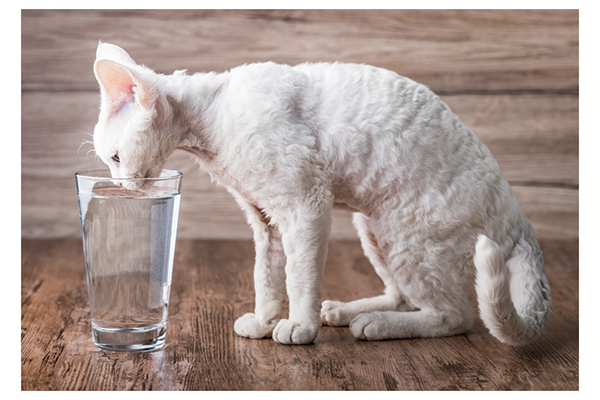
On a much smaller local front, we cat-loving owners can be heroes to our cats who don’t drink any or enough water, by checking out these 10 Catster tips for hydrating felines.  Dehydration in cats can be deadly:  it can be tied to urethra blockage and urinary tract infections and crystals, as well as digestive health.   

Inducements for cats to drink water range from wet-food diets to number of bowls, and from bowl placement to added tuna juice.  

                                                                   Catster image
Candidate Castro’s popular plank

How very refreshing -- and welcome.  Julian Castro, a Democratic presidential candidate and former secretary of housing and urban development, last month unveiled his animal welfare plan. 

Concurrent with the Trump administration’s assault on the landmark Endangered Species Act -- “the law that brought the bald eagle, the humpback whale and the grizzly bear back from the brink of extinction,” as the Washington Post put it -- Castro has made a detailed animal welfare plan part of his platform, and it includes strengthening the ESA.

His ideas include ending the euthanasia of healthy cats and dogs in shelters, making animal cruelty a federal crime and expanding U.S. protected lands. (issues.juliancastro.com/paw-plan/)

Disservice to Dogs

So now the US Postal Service is in on it too: “honoring” so-called “military working dogs” for their courage and loyalty by issuing a first-class stamp series with images of four breeds.  It’s all so altruistic and patriotic -- and wrong. 

Dogs don’t enlist or aim to “work" in humans’ wars.  They don’t seek the chance to sniff out bombs or perform any of the other dirty-work things people train them to do.  And they sure don’t seek a hero’s death (or the silly medals they’re sometimes awarded, posthumously).

Dogs should be free to live dogs’ lives.  Period.

Think involuntary “cannon fodder” . . . and boycott these sick stamps.


No 'military working dogs' need apply


#


Your comments are welcome. Just go to 1moreonce.blogspot.com and have your say.   

Wednesday, August 28, 2019

It takes diehard advocates to make ‘feel good’ news for animals

Capybara
A recent blog comment mentioned “feel good” news here with appreciation, as if that’s a rarity.  Well, it is!  Isn’t media focus usually on the unconventional-to-bad news?  Don’t headlines usually scream the same things (to those who still read newspapers)?  So-called “good” or “feel good” news really is the exception, isn’t it?

However true, that’s a huge shame. But consider: how long would we read or watch “feel-good news” with interest?  Wouldn’t it become ho-hum? even saccharine?

In the world of (non-human) animals, alas, bad news seems to prevail. Maybe it’s about helpless animals on factory farms (certainly no good in that!) or the latest plans for a deer hunt, or abuse of a pet.  And we haven’t even gotten to elephant, rhino and pangolin poaching, or the myriad other horrors animals are subject to around the world.

It can seem that (non-human) animal life is fraught with peril and death.  And to the degree that’s true, we keep reading and seeing “feel bad” news about animals.  Remember human entitlement?  the belief that we have dominion over all other creatures?  Far too many humans still subscribe to that outlook.

The very best news of all in animal reporting deals with those who aim to counter the hateful things done to animals by working for animals -- the animal advocates of all kinds (volunteers, legislators, donors . . .) who press for humane treatment of animals, who remind us of our values, who keep up the fight to improve the lot of animals -- which continues to be sorely needed!

Jaguar
Whether individuals, groups, state or national organizations, the animal advocates I’m speaking of are the ones who give us hope and invite us to join their rescue operations.  In reminding us of what’s possible, they recruit the “better angels” in us.  Their doing so is more important than ever now, with cruel, uncaring people in power, eager to strip away animal protections and penalties for offenses against animals.

In earlier blog posts here I’ve written, admiringly, about a few people who take specially good care of animals.  I want to learn about and talk up many more such people!  Now, with summer nearly over and school starting soon, it’s time for animal advocates to share their plans, appeal for support, enlist helpers and get going!  

Rain forest animals

The thousands of fires now burning in the Amazon rain forest are catastrophic for the millions of humans who live and work there, for people the world over and for the world itself.  The fires also terrify and jeopardize the more than 2,000 species of animals living there, who must somehow deal with this horrific situation to survive. 

Tapir
The Dodo story linked here outlines ways to help animals in the Amazon: (1) donate, (2) get involved, and (3) consider what you eat.  (That last section is lame, I think, doing little more than suggesting at least one meat-free meal a week.)

Worth remembering: the Amazon rain forest is considered “the greatest reservoir of fresh water and biodiversity on the planet.”  It’s home to 1 in 10 animal species on earth.  It must be saved!
https://www.nytimes.com/2019/08/26/opinion/amazon-rainforest-fire.html?em_pos=small&ref=headline&nl_art=9&te=1&nl=opinion-today&emc=edit_ty_20190827?campaign_id=39&instance_id=11932&segment_id=16511&user_id=a360dad7b26df61ea65737080d3deedd&regi_id=20760274emc=edit_ty_20190827

‘Do what I say, not . . .”

I can’t help feeling a little smug right now because I scooped the Times of Trenton -- which had published that ridiculous story about former Gov. Christie and his civility project (see previous post) without accompanying editorial criticism.  In contrast, I read it, disbelievingly, and reacted in print asap. 

But yes, the Times did later editorialize on the gross hypocrisy and cowardice of Christie’s initiative.  I wonder whether Christie read it. . . !
https://www.nj.com/opinion/2019/08/chris-christie-like-melania-trump-calls-for-civility-editorial.html

#


Please comment on this post!  Just go to 1moreonce.blogspot.com to react.        

Monday, August 19, 2019

The ‘silly season’ lives on, with both human & bovine animals

                                                                             Catster pic

There used to be a summer “silly season” in journalism, when legislatures were on break, people were on vacation and serious news was hard to come by.  Readership fell off.  What to do?   Newspapers used attention-grabbing headlines and off-beat stories to lure readers and advertisers, and make it through the dog days of summer.

Although silly seasons long ago faded away and news cycles nowadays are practically instantaneous, almost every day’s newspaper still brings silly season-style stories.

Here’s such a story, about a human animal, that I couldn’t resist.

Just last week, with editorial straight face, the Times of Trenton ran a story about how former governor Chris Christie will soon unveil “the Christie Institute of Public Policy” at Seton Hall University School of Law, Newark.  Its goal: bring civility to today’s politics.  

It is to laugh -- but you have to have been familiar with Christie’s public persona during his two terms to fully appreciate the humor.  Two other facts from the silly story: Seton Hall is Christie’s alma mater, in case you wondered, and “the institute will not focus on New Jersey politics,” the story said.

Enough of that silliness -- or hypocrisy.  Next, Christie may offer workshops on ending bear hunts. 

On to a non-human animal: the cow.  Typically calm, self-contained and non-threatening, cows have
                                                                             NYTimes pic
lately become therapists for humans. Their placid, non-judgmental nature, their stillness, their approachability. . . all these traits have recommended cows to people wanting to hug, pet, brush and confide in them. 

“Cow cuddling”:  It has a warm and welcoming sound, doesn’t it?  And it’s happening on a farm in upper New York State, where for $75 an hour per couple, people can spend time with either Bella or Bonnie, hugging, cuddling and conducting one-way conversations. 

This often happens on the ground because contented cows prefer lying in the grass to chew their cuds.  So, if the cows drop down, humans hunker down with them, where it’s easier to hug, anyway. 

The couple who own the farm heard of this practice in their native Netherlands during a recent visit home.  They bought two gentle, horn-free cows to become therapy animals, adding to their bed and breakfast offerings.

                           NYTimes pic
Maybe this could become a future “career” for cows saved from slaughter as “meat-free meats” grow more popular.  Then again, whatever they might be doing, cows would still be the source of methane, a powerful greenhouse gas, in fearful quantities. 

(Cows to the contrary, I’m persuaded that therapy begins at home, with two loving, highly huggable cats who listen, look concerned and hang in with me till the rough patches end.  And, unlike cows, they don’t emit methane.)

Moving away from the silly season into the gratuitously cruel one, there’s Arby’s reply -- or nose-thumbing -- to the meat-free meat movement: its meat-based carrot, or “Marrot.”  Essentially turkey meat with a glaze, Arby’s “megetable” looks like a carrot and reportedly has much of its nutritional value.

This concoction is simply needless and cruel, especially for turkeys.  Just what the world doesn’t need right now is more opportunity to consume animal flesh. 

(“. . . filet mignon is nothing but a piece of cadaver under cellophane.” -- Brigitte Bardot, in Tears of Battle: An Animal Rights Memoir)


And just what the world does need right now is fish-free fish!  Well, it’s in the works, and why not?  Commercial fishing is accused of strip-mining the seas, hugely depleting the world’s fish stock, and we’ve clogged the oceans with plastics and other sea-life killers.  It’s time for seafood alternatives.  

One such substitute, Good Catch tuna, is available right now at Whole Foods, and it has reportedly inspired tuna melt binges.  If we’re slowly moving toward terrestrial meat-free foods, why not do the same for fish?
#


                                                                                           Catster pic


Your Meows or Moos or You Name Its are always welcome.  Just go  to 1moreonce.blogspot.com and let us hear from you!

Monday, August 12, 2019

People & animals can be mutually beneficial


Do you say “Ah-h-h-h-h!" or "Ug-g-g-g-g-h!" at the thought of the “dog days of summer”? 

                                                                                              AccuWeather pic
Much preferring heat and humidity (and a swimming pool) to the perpetual shivers of winter, I’m OK with the sultry days named for Sirius the Dog Star.  When Sirius rose with the sun in July, some ancients believed this added heat to the day.  And so, that high-season weather became known as the dog days of summer.

Such weather can definitely bring out the best in  people.  For instance, “G,” the handyman I know and admire, who drives 2 or all 3 of his rescue dogs with him to a job site.  Once there, he leaves his truck engine running so his pals stay cool in the cab.  He shrugs off his great good deed as if there were no other alternative.

That’s true animal advocacy.

Now consider “S,” a career cat specialist, who, besides her phone-consult time, attends to 8  formerly feral kittens who live temporarily in her large (thank St. Gertrude, patron of cats) bathroom with a mom cat until they find homes; 3 family cats and a 4th  needing to be isolated.  And did I mention her human family of 4 others? 

That’s all kid stuff to “S.”  After weeks of planning, she has begun to build a catio for Spot, who has feline leukemia, and for other felines’ sake, lives alone in the capacious (thanks again, St. Gertrude!) house.  However, he’ll soon have his own custom-made indoor-outdoor space -- and share it with another cat “S” plans to find with the same diagnosis.

The dog days of summer should be so good for all animals!

(BTW, if you know of other good-for-animals deeds people are performing, please let us know about them via a comment here, and thanks!)

T. rex approaches

Moving even further back than the ancient origins of the dog days of summer, we come to Tyrannosaurus rex, resident of earth 66 million years ago.  The US Postal Service has announced the issue of a set of 4 T. rex first-class stamps at the end of this month.

One image shows T. rex as a fluffy (!) infant; the second, as a hunting juvenile; and the third as a full-grown predator. The fourth shows a T. rex skeleton at the Smithsonian.

As “forever” stamps, always good as first-class postage, the T. rex foursome is both fearsome and colorful.  All the kids you know who are into dinosaurs might love to receive something in the mail with such a stamp.  (“Collect all four!”)

A year-round read
   
I wonder how Sy Montgomery, my latest discovery on the subject of animals, would relate to a T. rex. After all, she has befriended such creatures as tree kangaroos and emus, a giant tarantula and an octopus, besides more predictable animals in our world.  

She writes about all of them in How to be a Good Creature: A Memoir in Thirteen Animals, her beautifully written, designed and illustrated book (Houghton Mifflin Harcourt, 2018) -- with themes that include the otherness and sameness of people and animals, and how we learn to become empathetic.  

In short, Montgomery says, “Knowing someone who belongs to another species can enlarge your soul in surprising ways.”  


“We need another and a wiser and perhaps a more mystical concept of animals. . . . For the animal shall not be measured by man.  In a world older and more complete than ours, they move finished and complete, gifted with extensions of the senses we have lost or never attained, living by voices we shall never hear.  They are not brethren, they are not underlings; they are other nations, caught with ourselves in the net of life and time, fellow prisoners of the splendour and travail of the earth.”  -- Henry Beston in The Outermost House (1928)


#

Your comments are always welcome.  Simply go to 1moreonce.blogspot.com and have a say!